Get Inspiration, Delivered.
Join our newsletter and get inspiring projects, educational resources, and other cool metal stuff, straight to your inbox.
Here’s a summary of what participants explored and learned in each workshop, along with video commentary from participating designers and architects.
A Closer Look at Combinatorial Tooling: From Few Molds, Many Panels
HKS LINE (Laboratory for INtensive Exploration) and Zahner workshop leaders challenged a basic assumption of architectural fabrication: that every unique panel requires a unique mold.
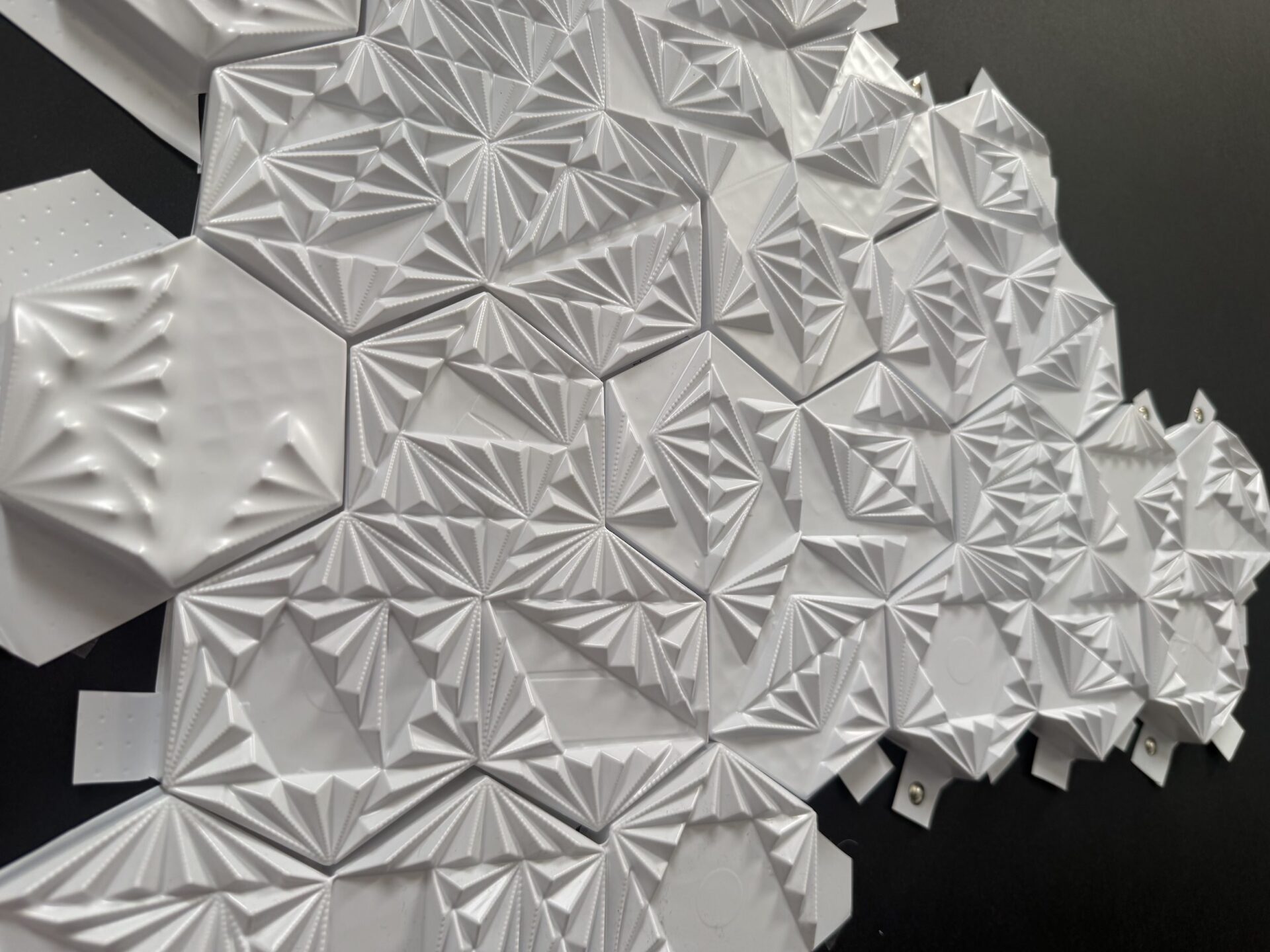
The workshop explored how a limited set of reusable tooling blocks could generate numerous panel geometries. By rotating, mirroring, repositioning, and recombining the blocks, participants created varied surfaces while maintaining consistent panel boundaries and connections.
The concept has practical implications for custom façades, screens, partitions, and other formed-metal assemblies. Because specialized tooling can make variation expensive, a combinatorial system could give architects greater creative freedom while reducing tooling costs and fabrication complexity.
Hear from Combinatorial Tooling Workshop Participants

Charles Portelli, Senior Associate at Perkins&Will, shares his appreciation for practical applications of the Combinatorial Tooling workshop.
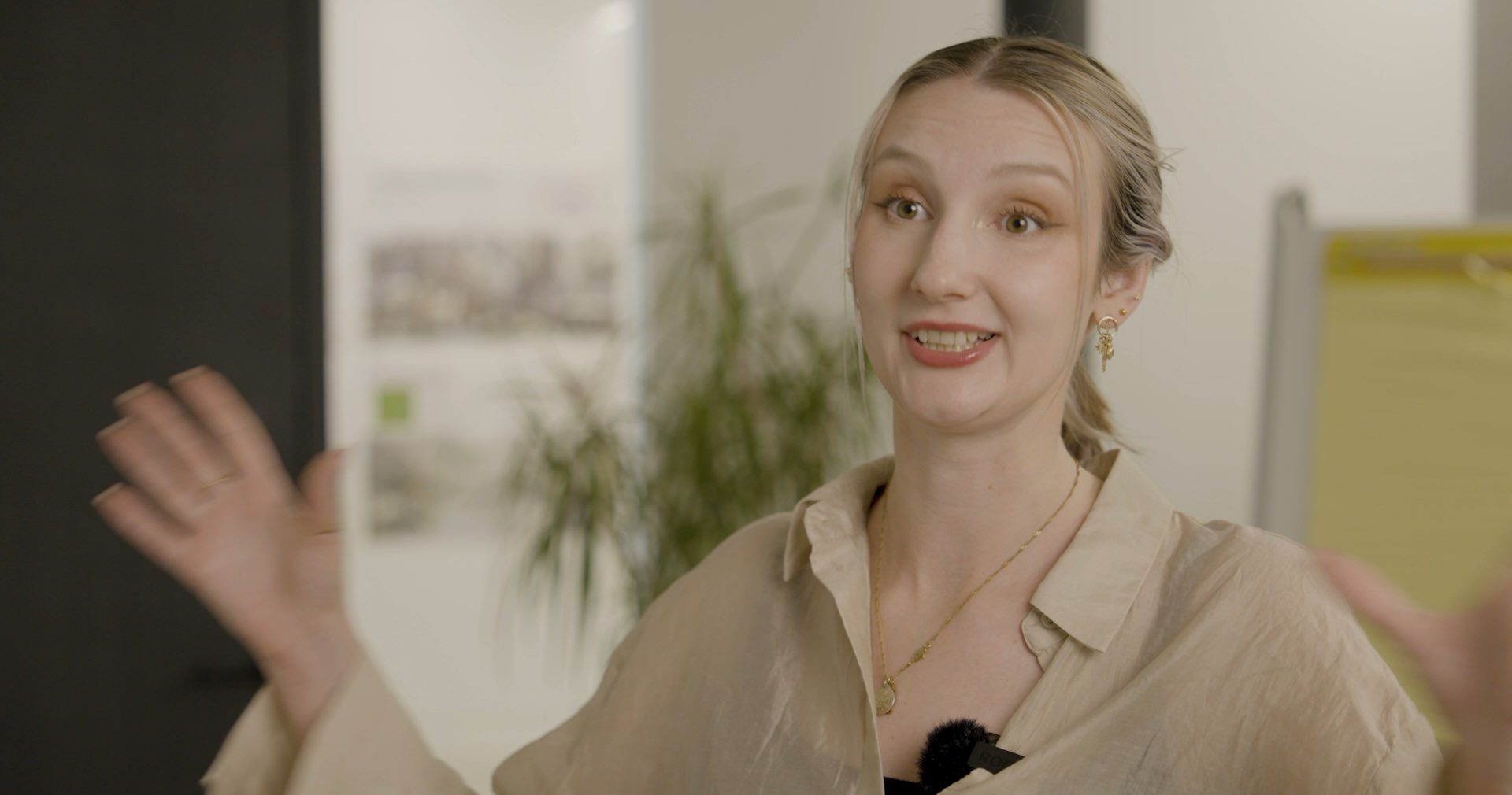
Līva Sadovska, Computational Design intern at HKS, shares what she learned about modularity at smaller scales in the Combinatorial Tooling workshop.
Participants used vacuum-formed thermoplastic as an accessible proxy for full-scale formed-metal fabrication. They developed configurations in Rhino and Grasshopper, produced tooling through CNC milling and 3D printing, and formed plastic sheets over their tools.
This rapid process let teams evaluate curvature, depth, forming behavior, and relationships between tooling elements, then immediately adjust their next iteration.
The experiments showed how surprisingly complex surfaces can emerge from simple tooling. Participants also introduced paper, fabric, pushpins, printed parts, and found objects. Even unexpected outcomes such as tearing, thinning, and tool deformation generated ideas, including using translucent areas for integrated lighting.
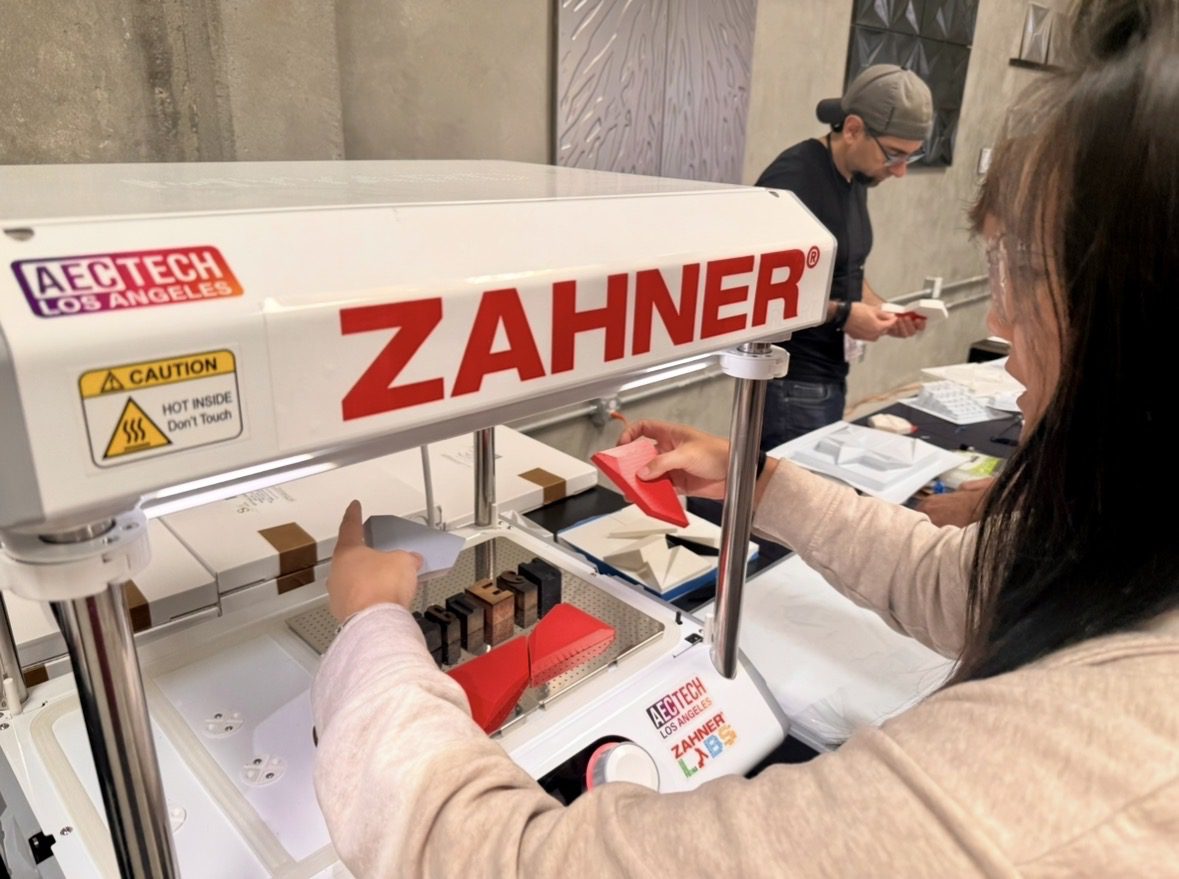
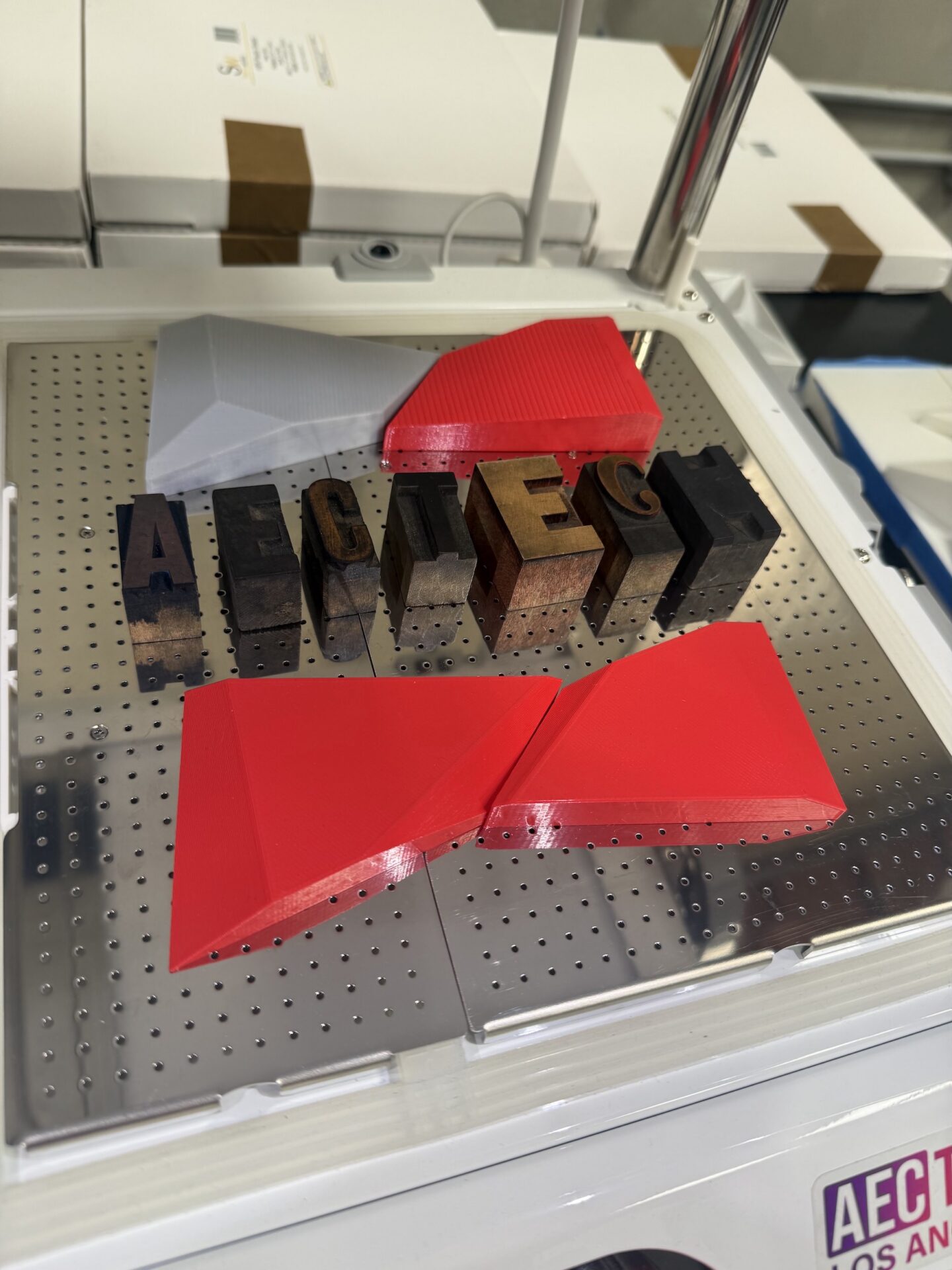
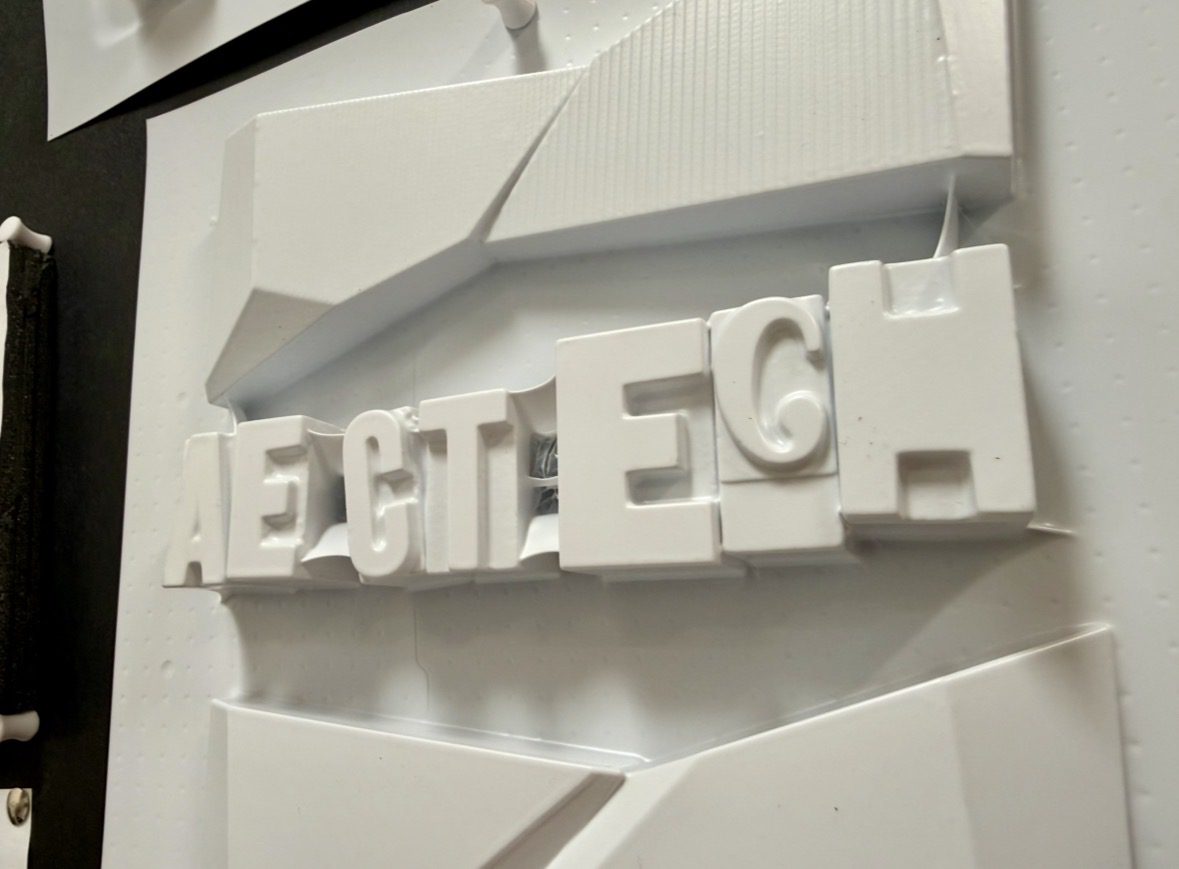
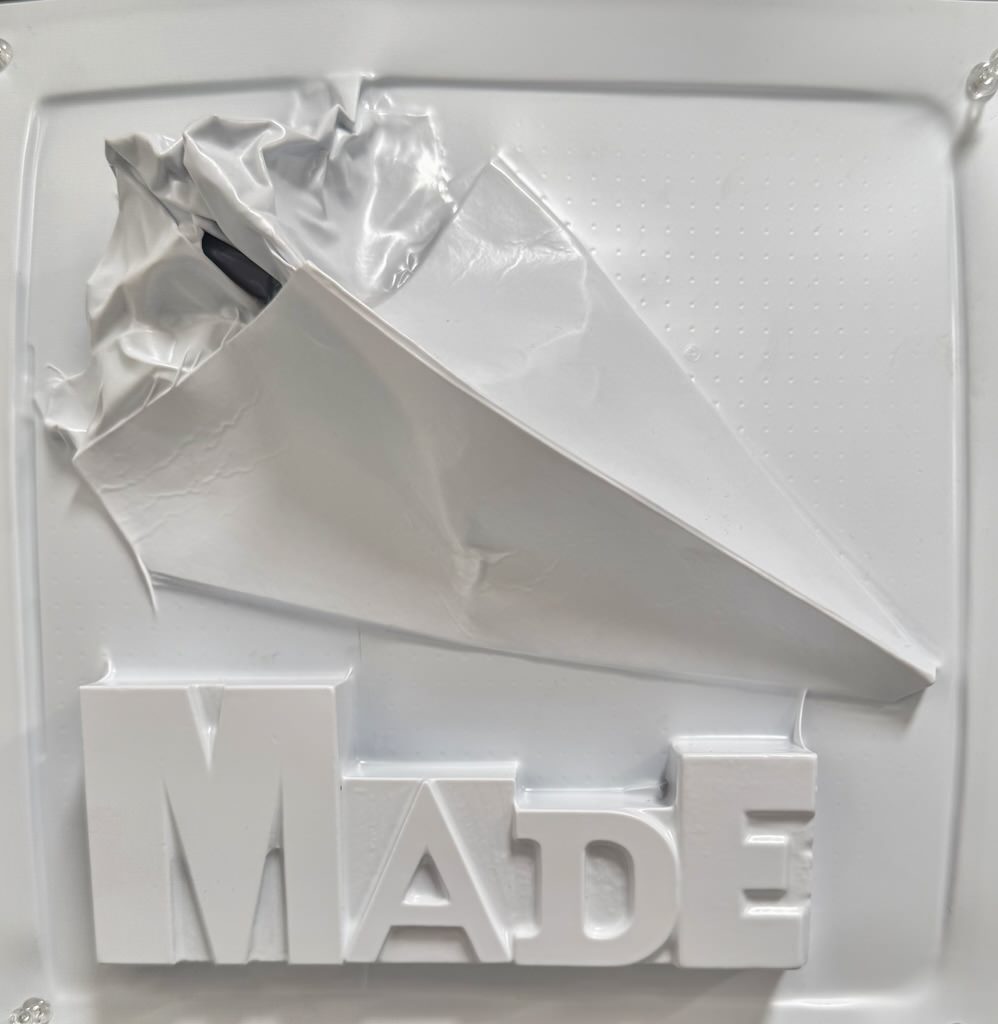
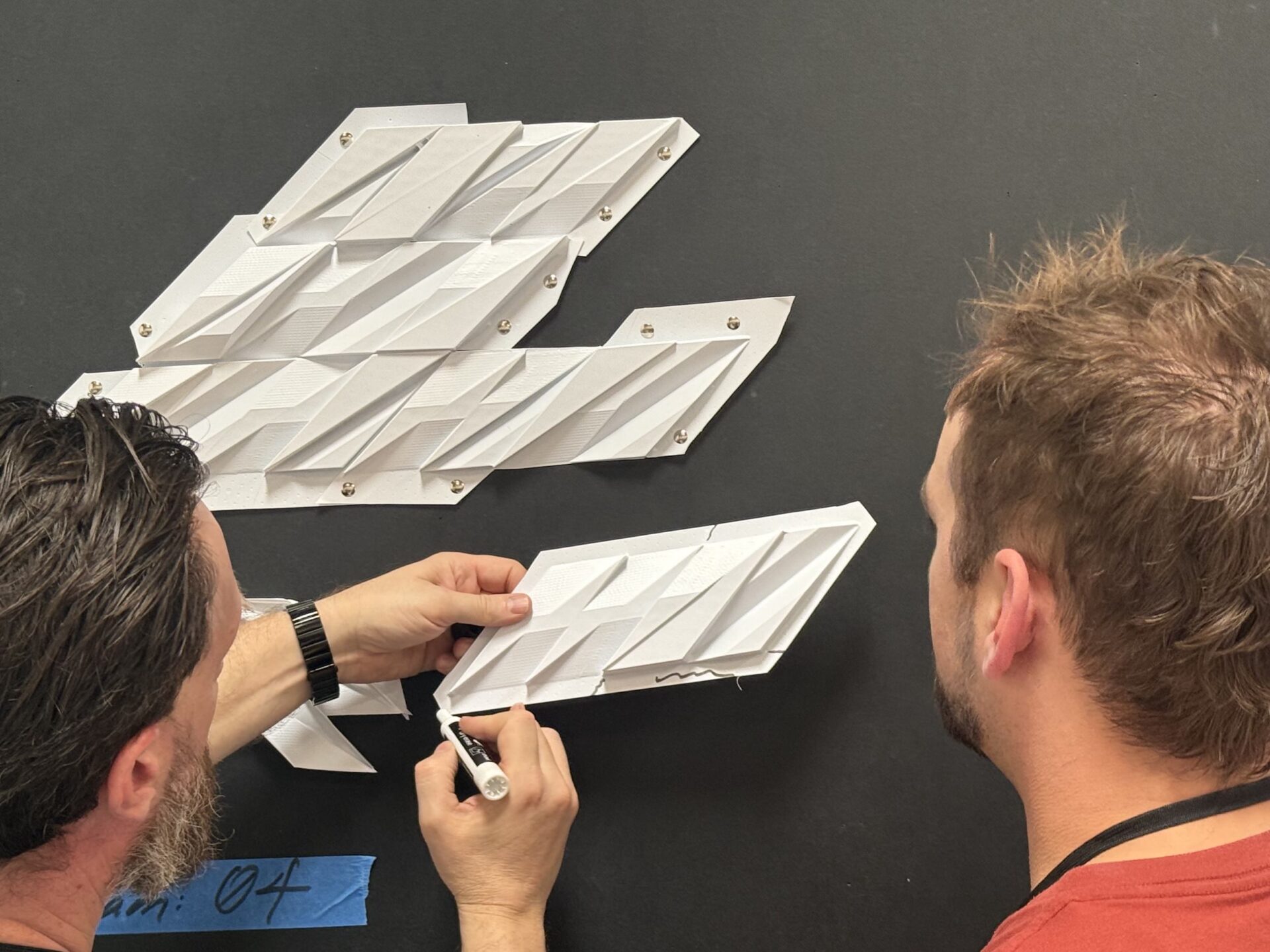
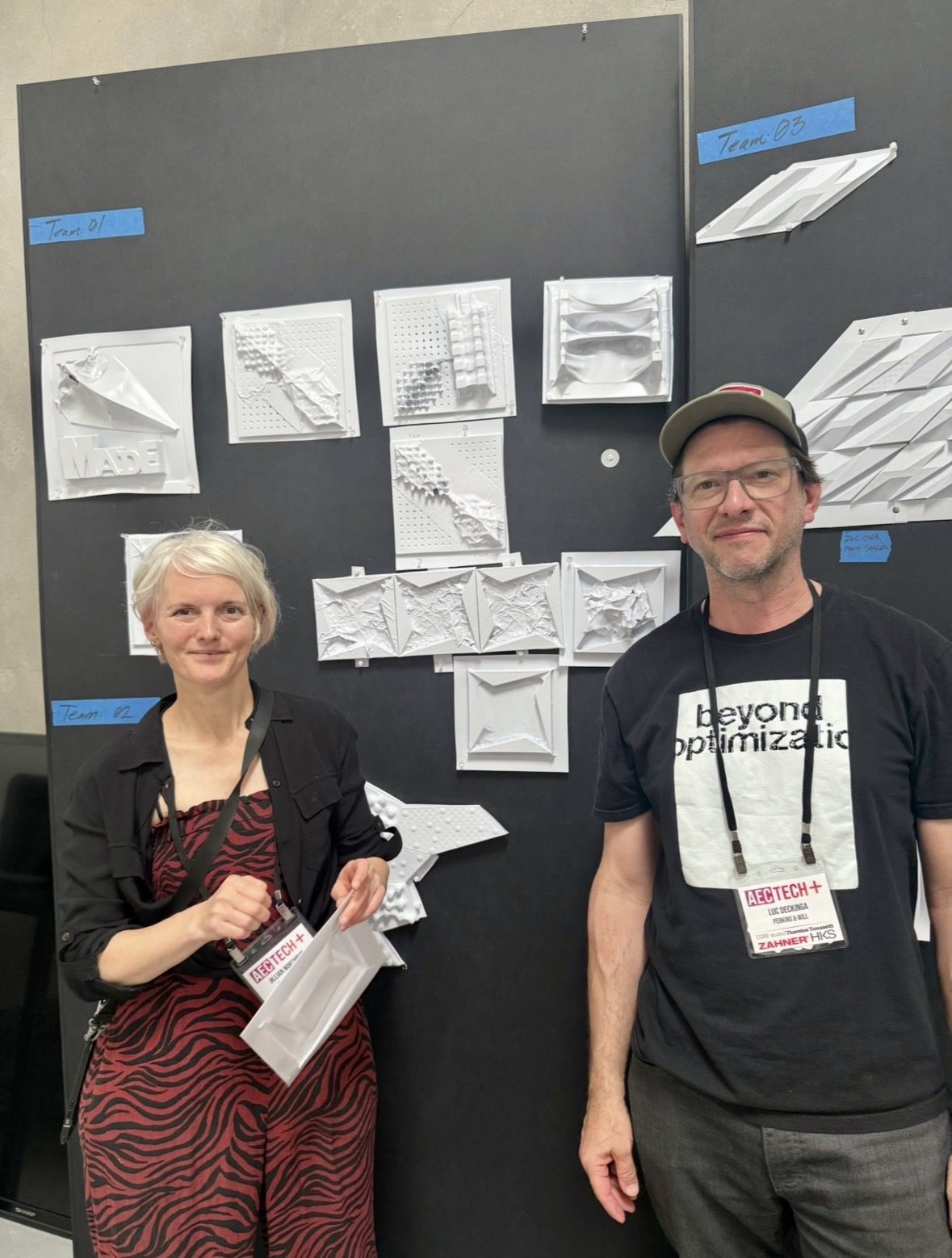
Another line of exploration involved registration and post-forming alignment. Participants tested whether some geometric relationships could be resolved after forming rather than entirely through precise tool placement beforehand, suggesting additional directions for simplifying fabrication.
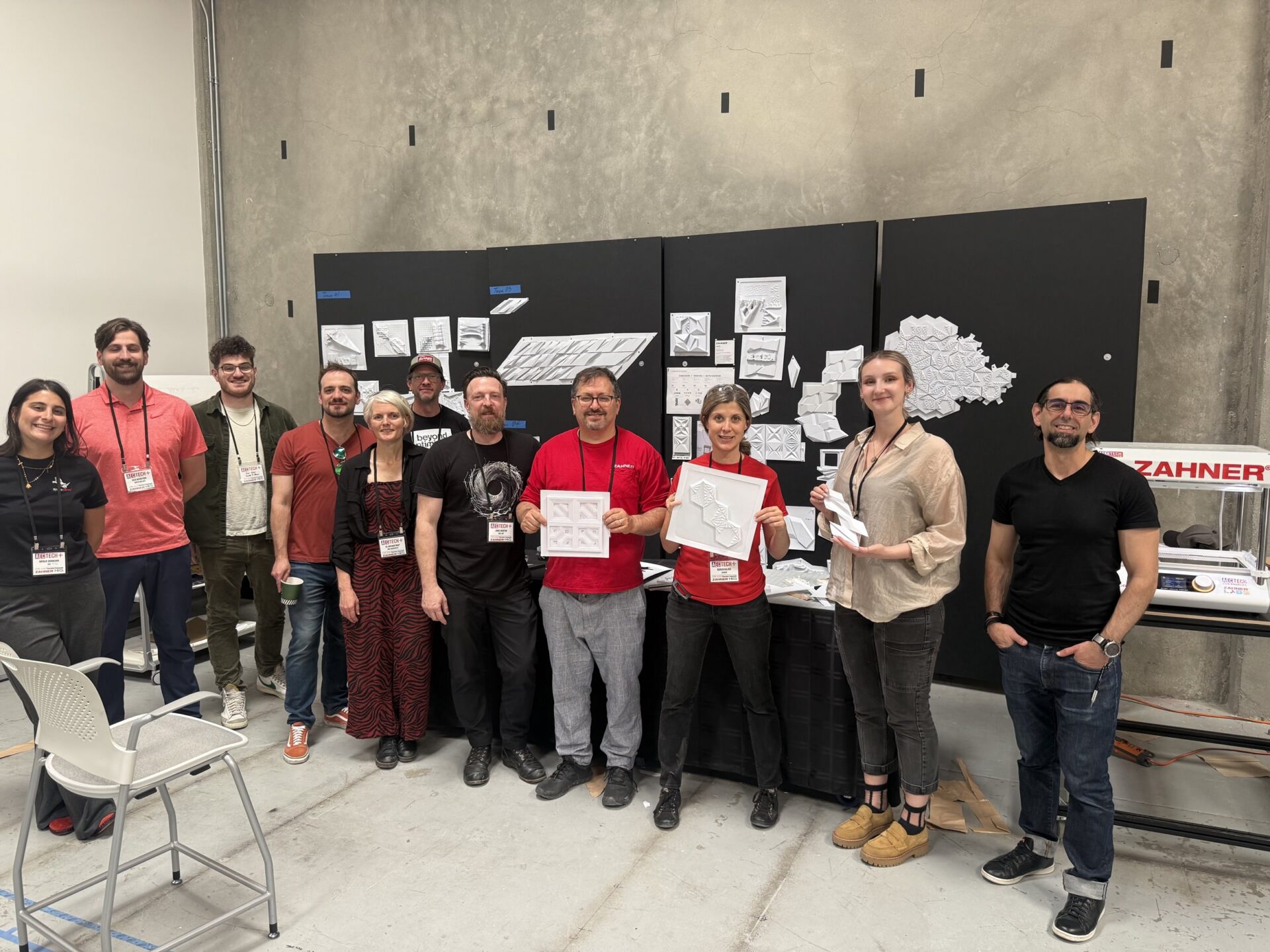
The completed panels were assembled into a larger partition, allowing participants to explore how varied formed components could be integrated into a repeatable architectural assembly.
Ultimately, the workshop reflected the iterative approach shared by HKS LINE and Zahner: bringing design and fabrication together earlier, breaking down silos, and learning through hands-on prototyping. Material behavior and fabrication constraints informed design decisions as ideas advanced toward building-scale applications.
Exploring Selective Patina: Programmable Surface Design
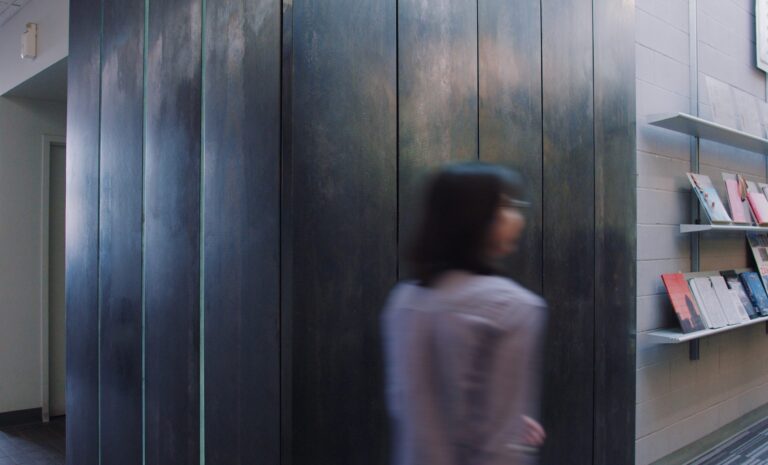
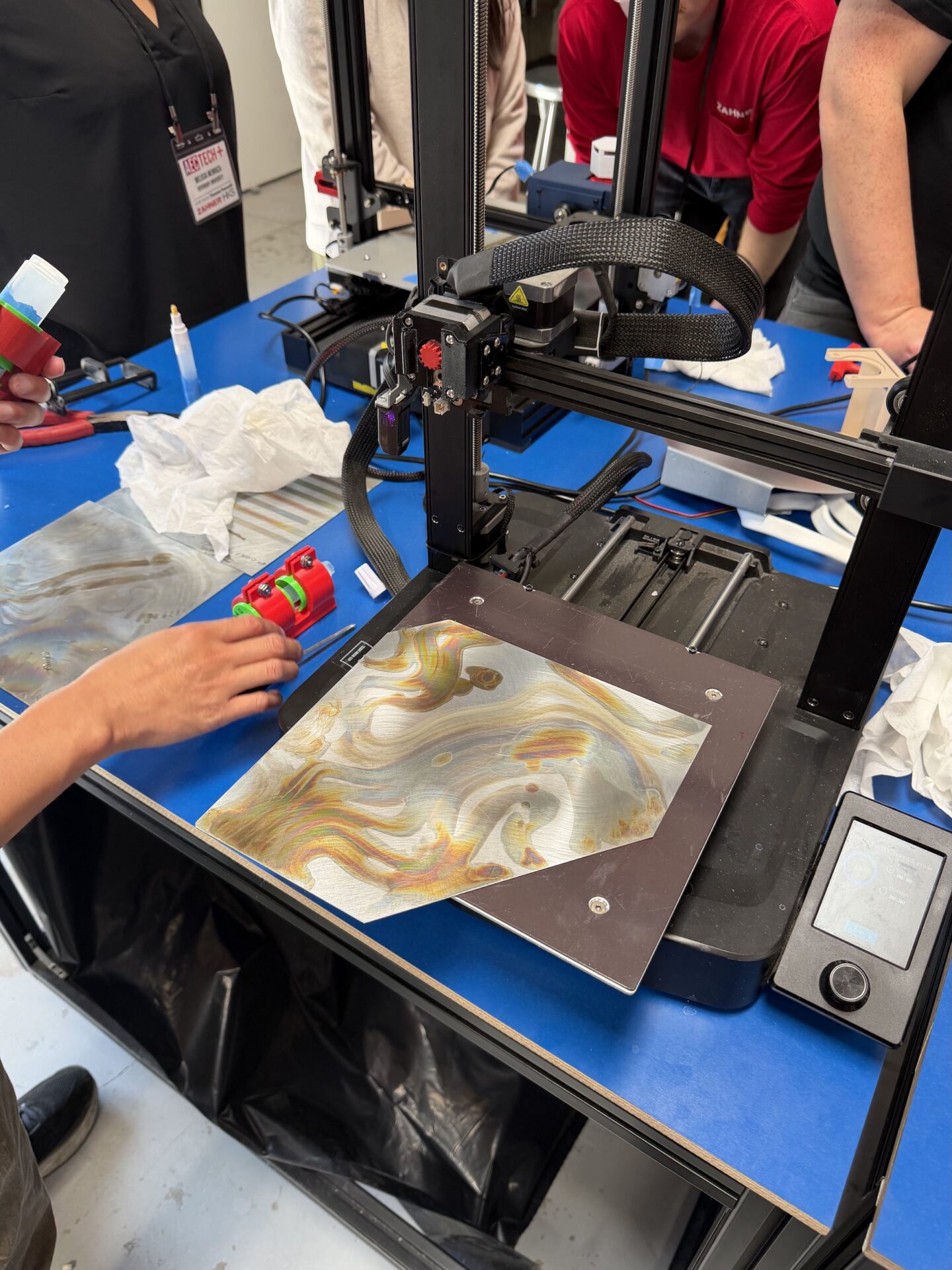
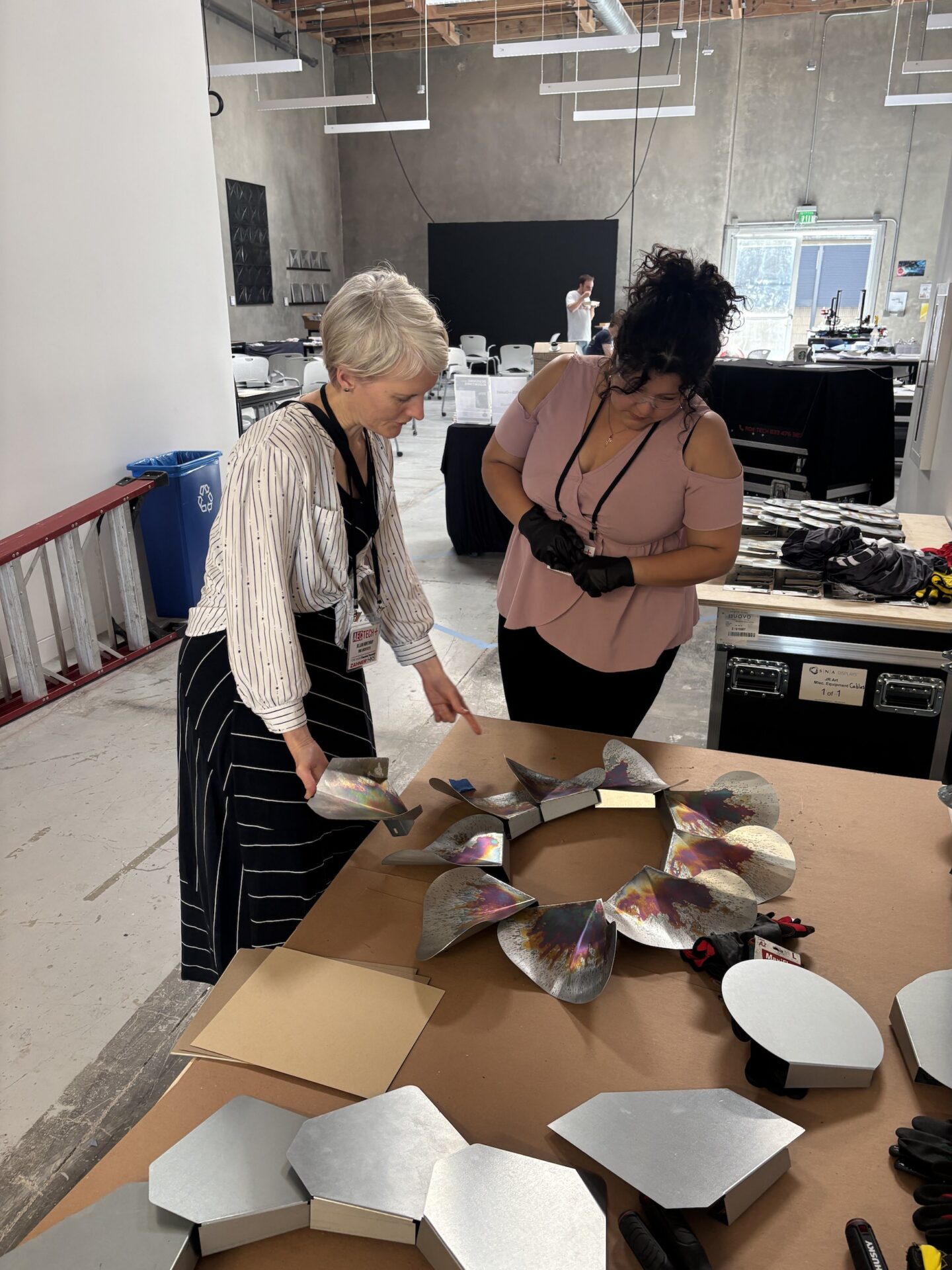
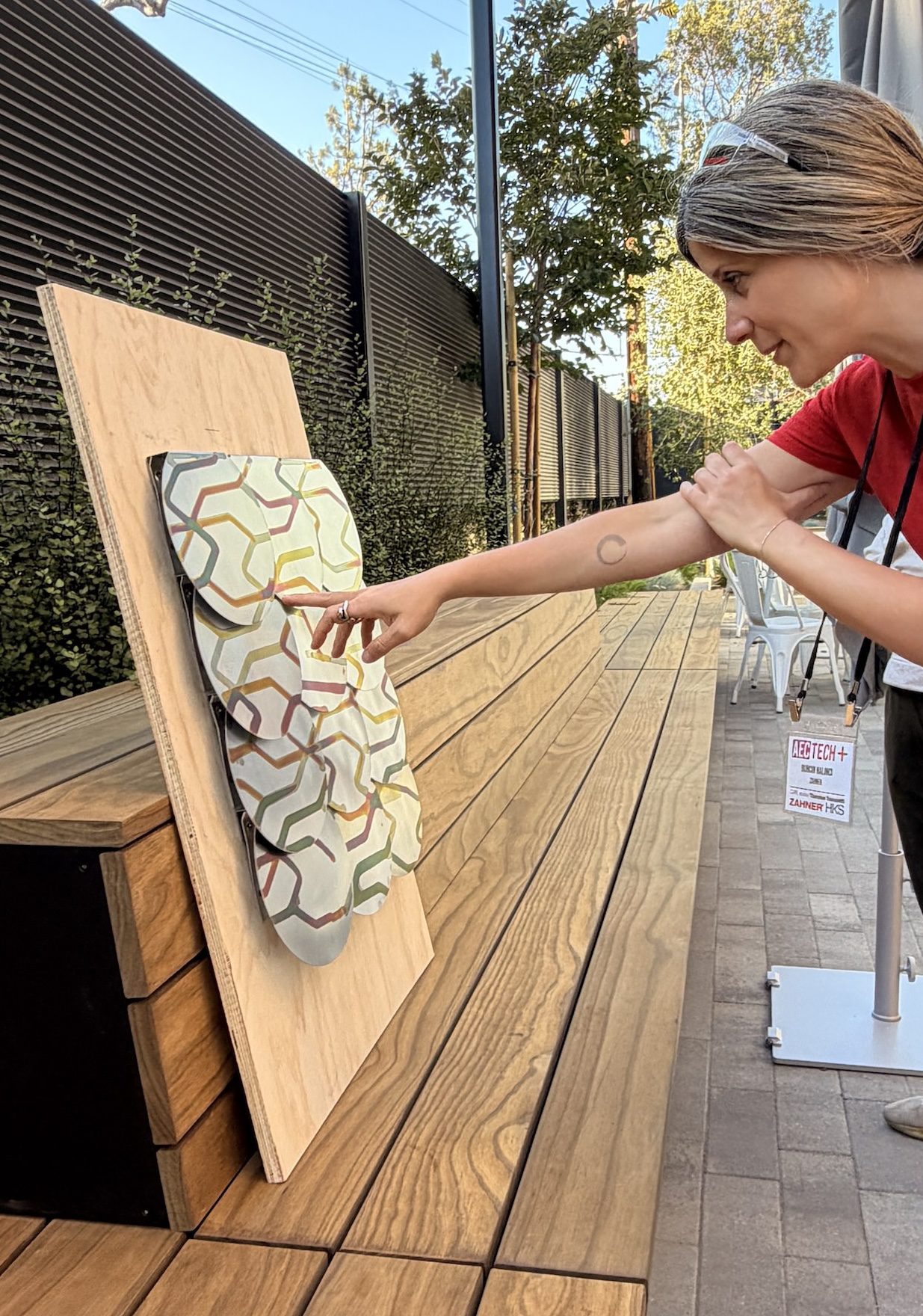
Rather than treating patina as a fixed finish applied uniformly across a surface, the workshop explored patina as a customizable surface treatment applied to standard panels, allowing variation from panel to panel. Digital instructions controlled where and how treatments were applied, allowing participants to investigate how process variables affect the resulting surface.
The approach opens up possibilities for project-specific patterns, gradients, localized finishes, and intentional variation across larger panel systems. More broadly, it suggests a way to create a closer connection between a designer’s digital intent and Zahner’s material-finishing expertise.
Participants generated patterns in Rhino and Grasshopper, translated them into machine movements, and used repurposed 3D printers and CNC plotters fitted with brushes, dabbers, felt tips, markers, and rotating applicators to apply patina solutions.
Hear from Selective Patina Workshop Participants
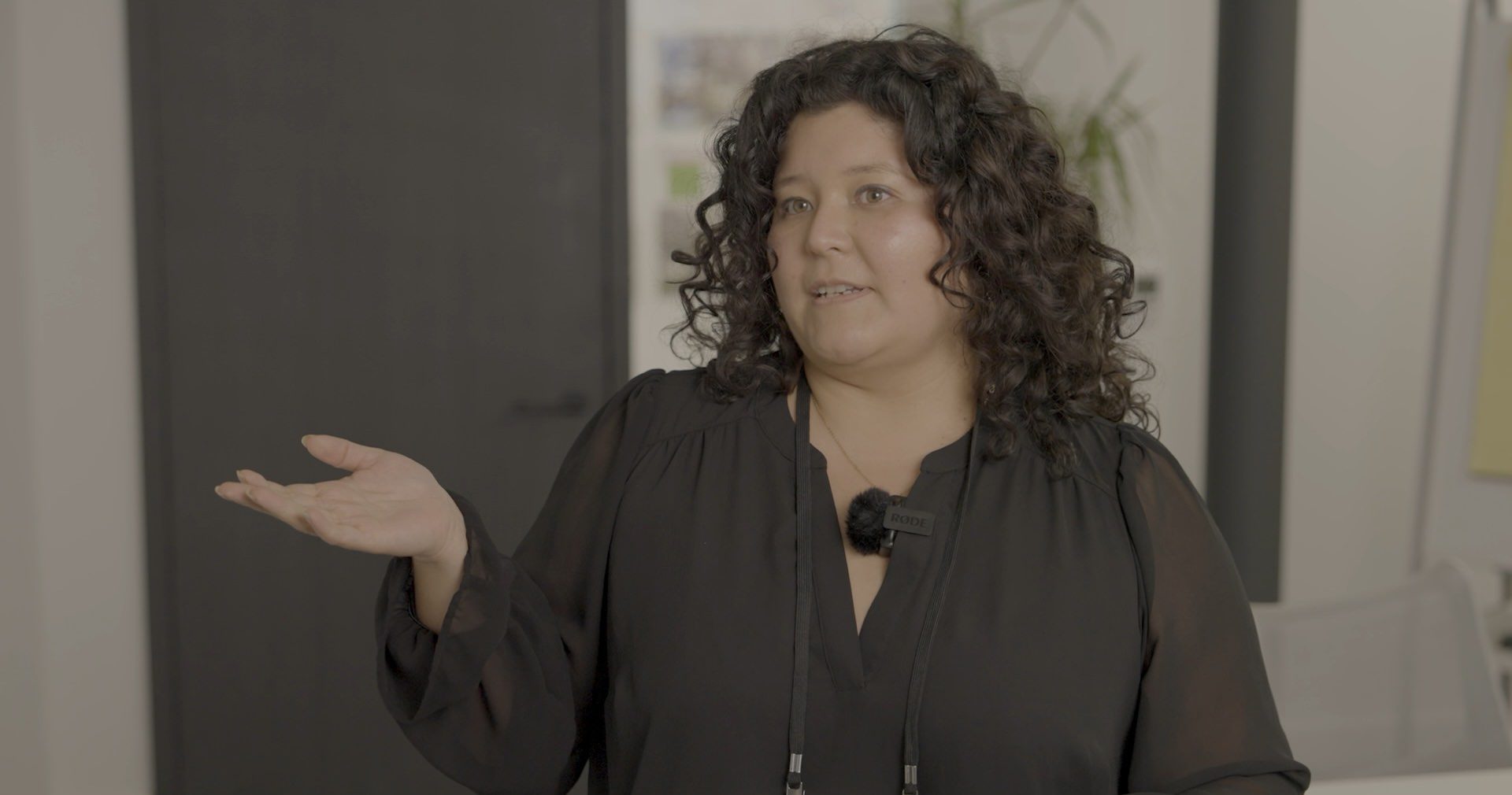
Melissa Mendoza, a student, shares what surprised her about the precision available with Selective Patina.
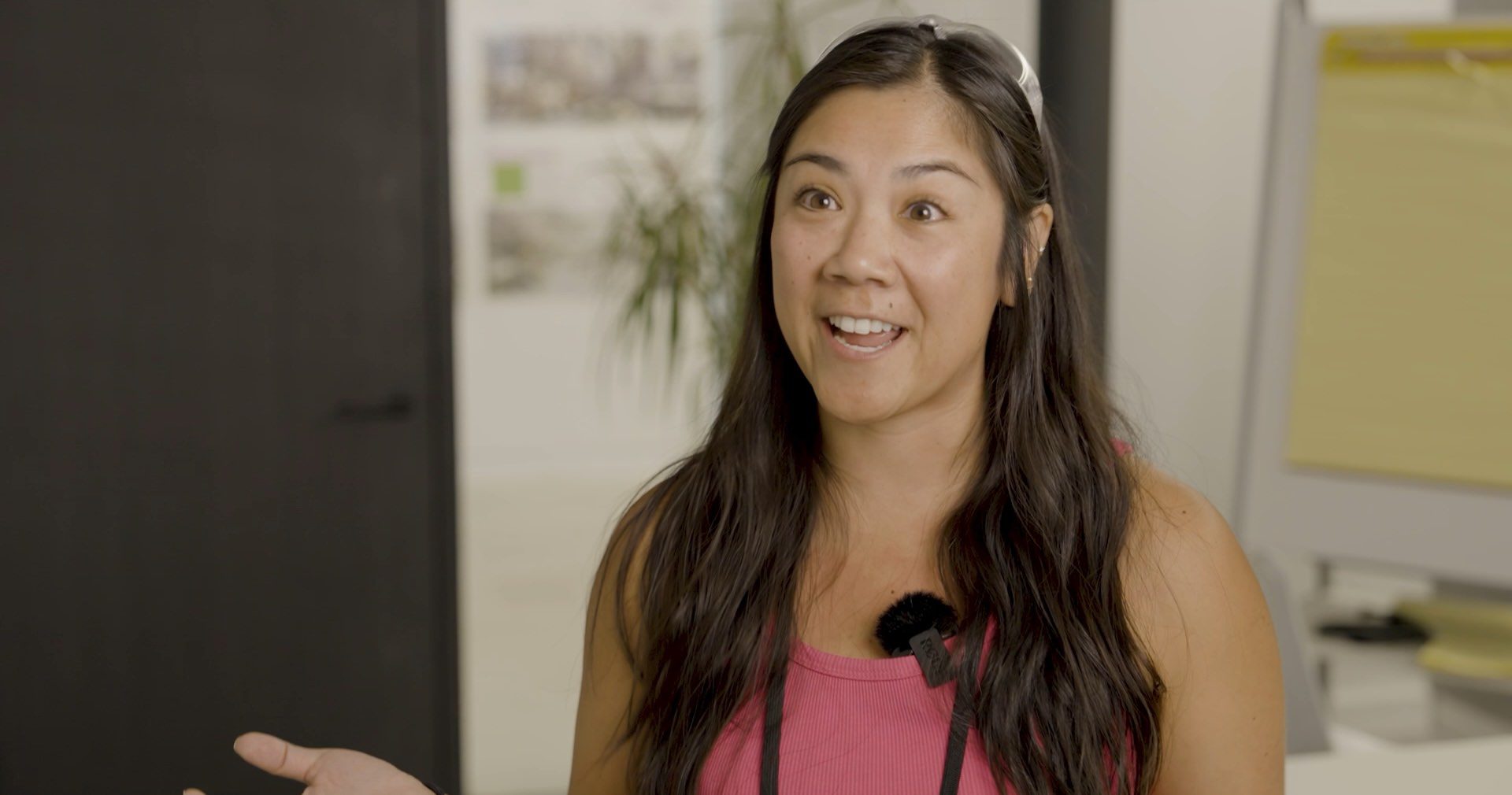
Nicole Sugihara, Architect at LETTER FOUR, discusses the creative opportunities Selective Patina offers.
They quickly discovered that the digital toolpath was only one variable. Machine speed, pressure, applicator type, chemical concentration, surface preparation, drying time, and rinse timing all influenced the result. Furthermore, the machine was not simply printing an image; it was initiating a chemical reaction.
The experiments also revealed opportunities for layering and resist-based processes. In one case, a second chemical application produced an unexpected contrasting line where portions of the earlier treatment appeared to resist the new application. That result suggested ways that layering, sequencing, and selective resistance could be used to influence color development and oxide formation across a surface.
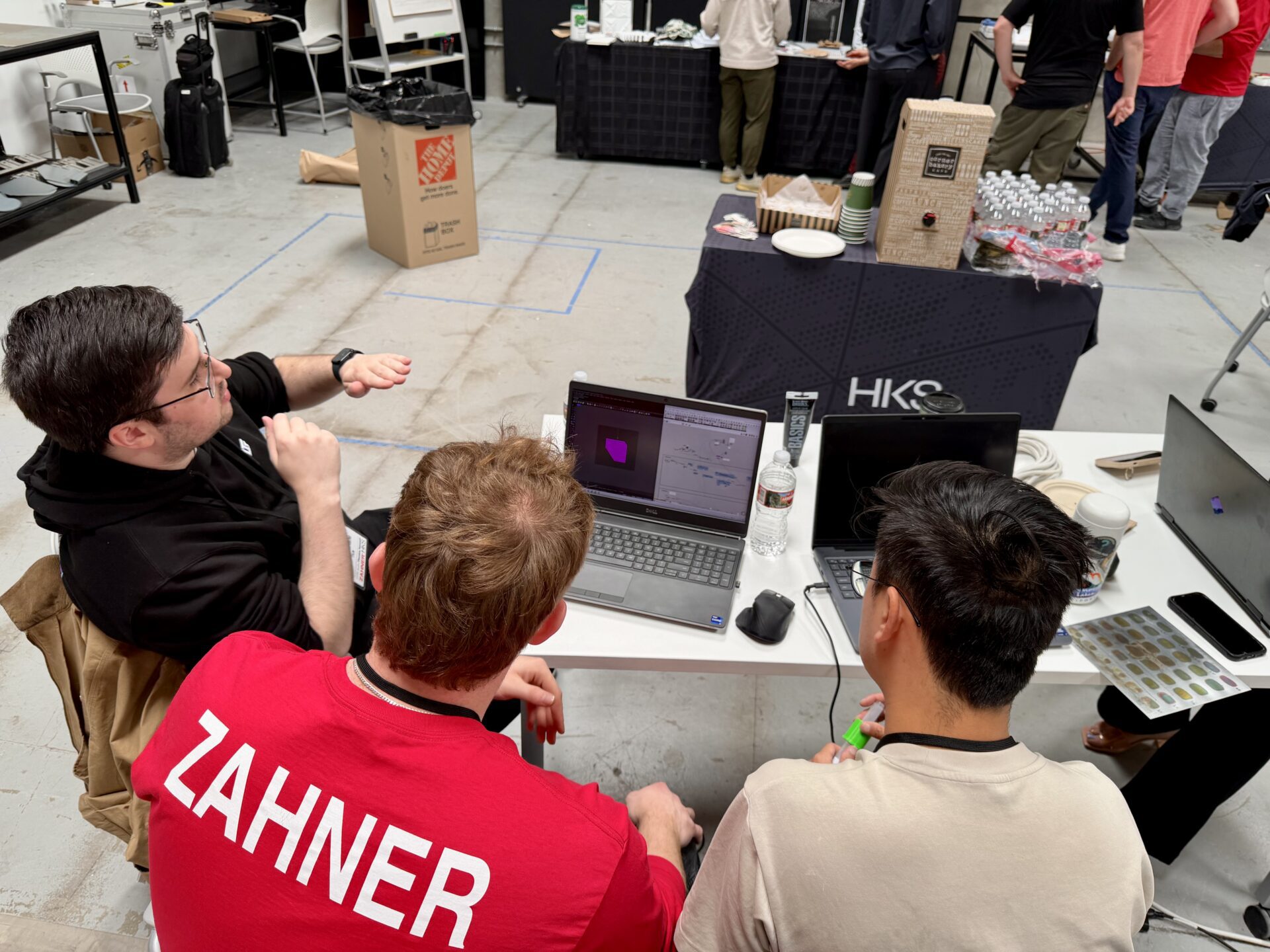
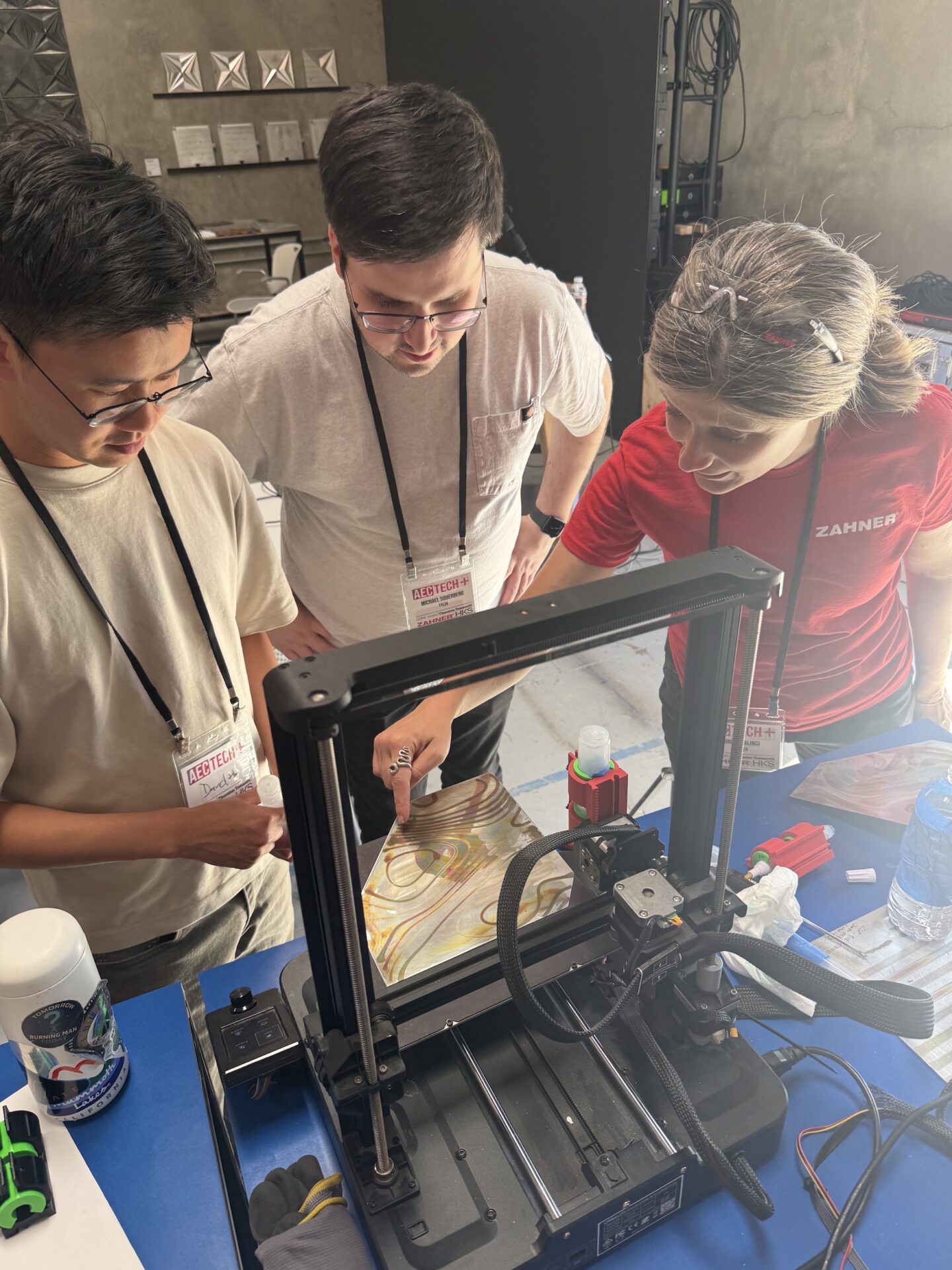
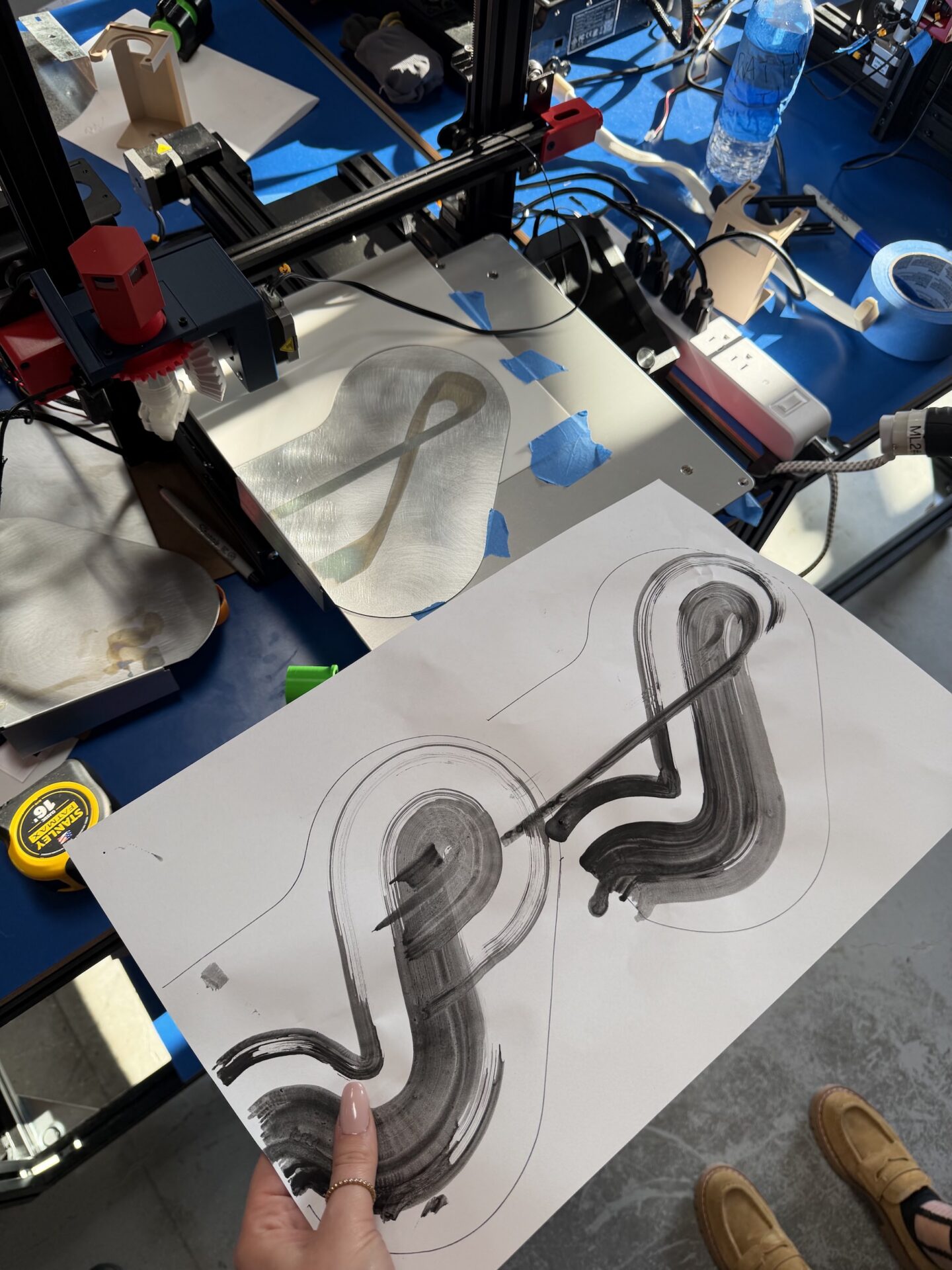
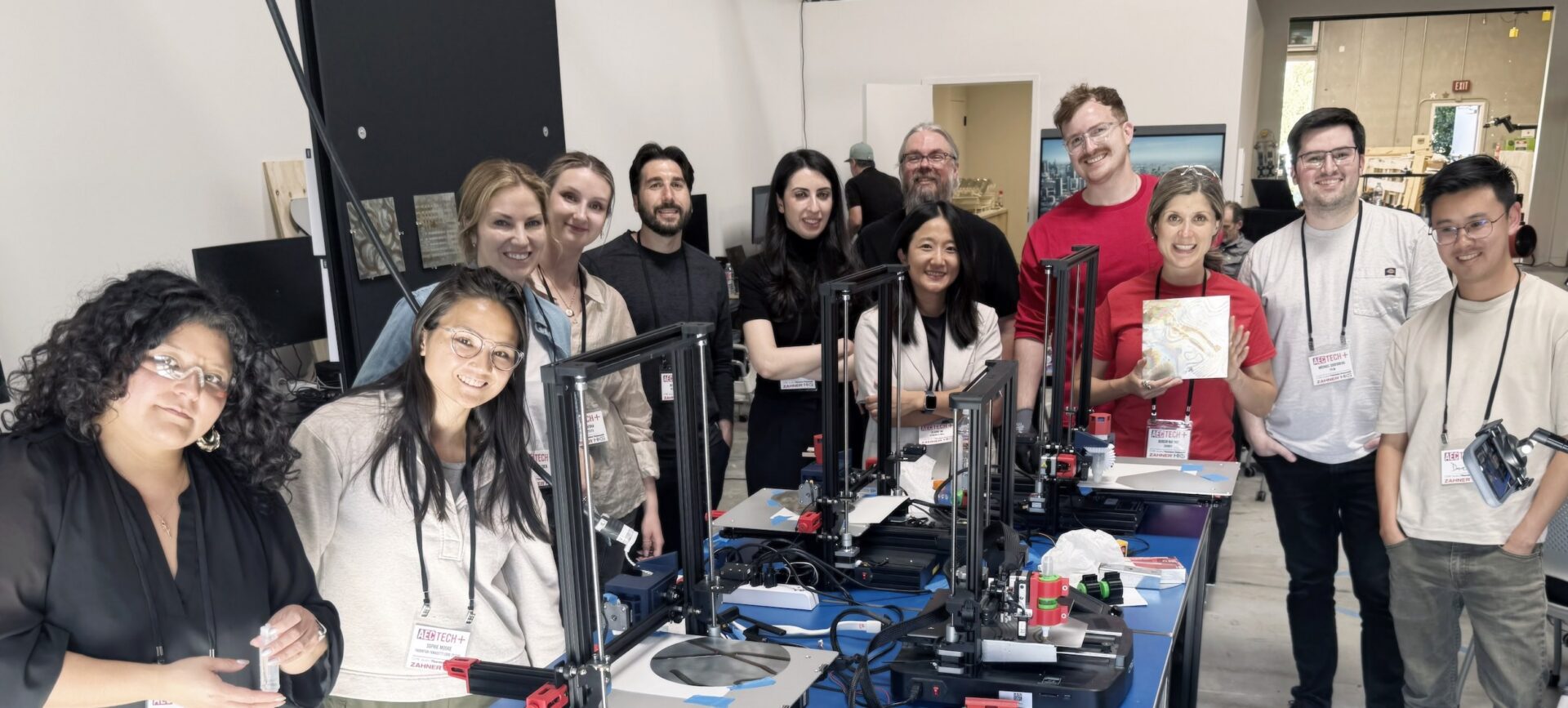
One participant compared the experience to an art class mediated through fabrication technology. The machine provided control and repeatability, while the chemistry preserved uncertainty and discovery.
The workshop offered a hands-on glimpse into Zahner R&D’s approach to innovation: experiment quickly, learn from material behavior, and scale promising ideas into architectural fabrication. While participants worked with repurposed 3D printers and small CNC tools, Zahner applies the same digitally controlled approach at full scale using robotic arms, custom gantries, and purpose-built fabrication systems. Selective Patina brings design, computation, chemistry, and fabrication together to create customizable metal surfaces at architectural scale.
Explore Selective Patina and bring a custom surface concept to your next project.
Beyond the Workshops: What Makes AECtech+ So Valuable
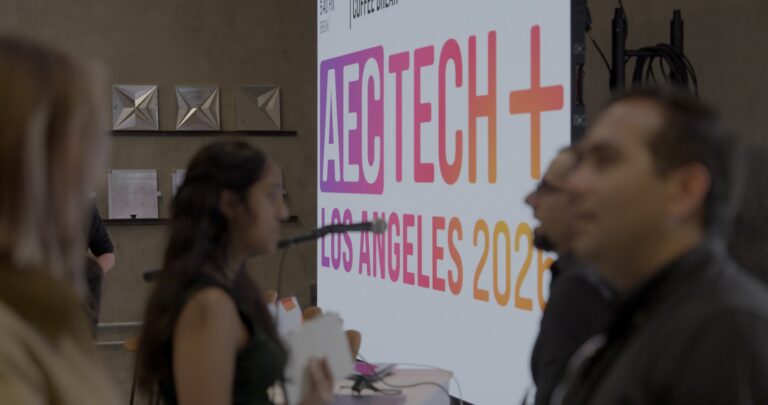
Hear more from attendees of AECtech+ Los Angeles 2026, and why they find the AECtech format so valuable for the Architecture, Engineering, and Construction industries:
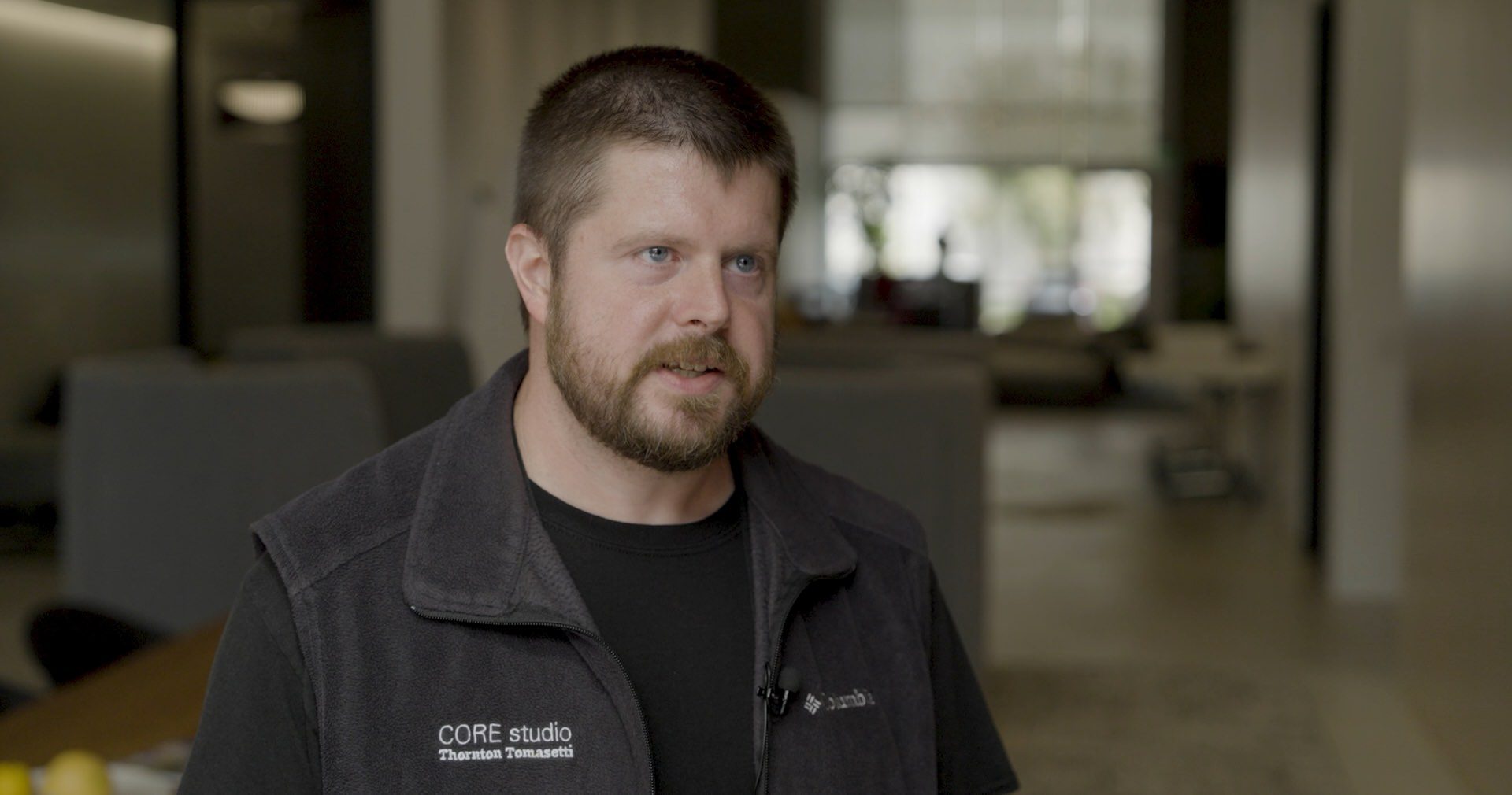
David Mans, Director of AECtech and part of Thornton Tomasetti’s CORE Studio, explains the goal of AECtech and what makes it unique.
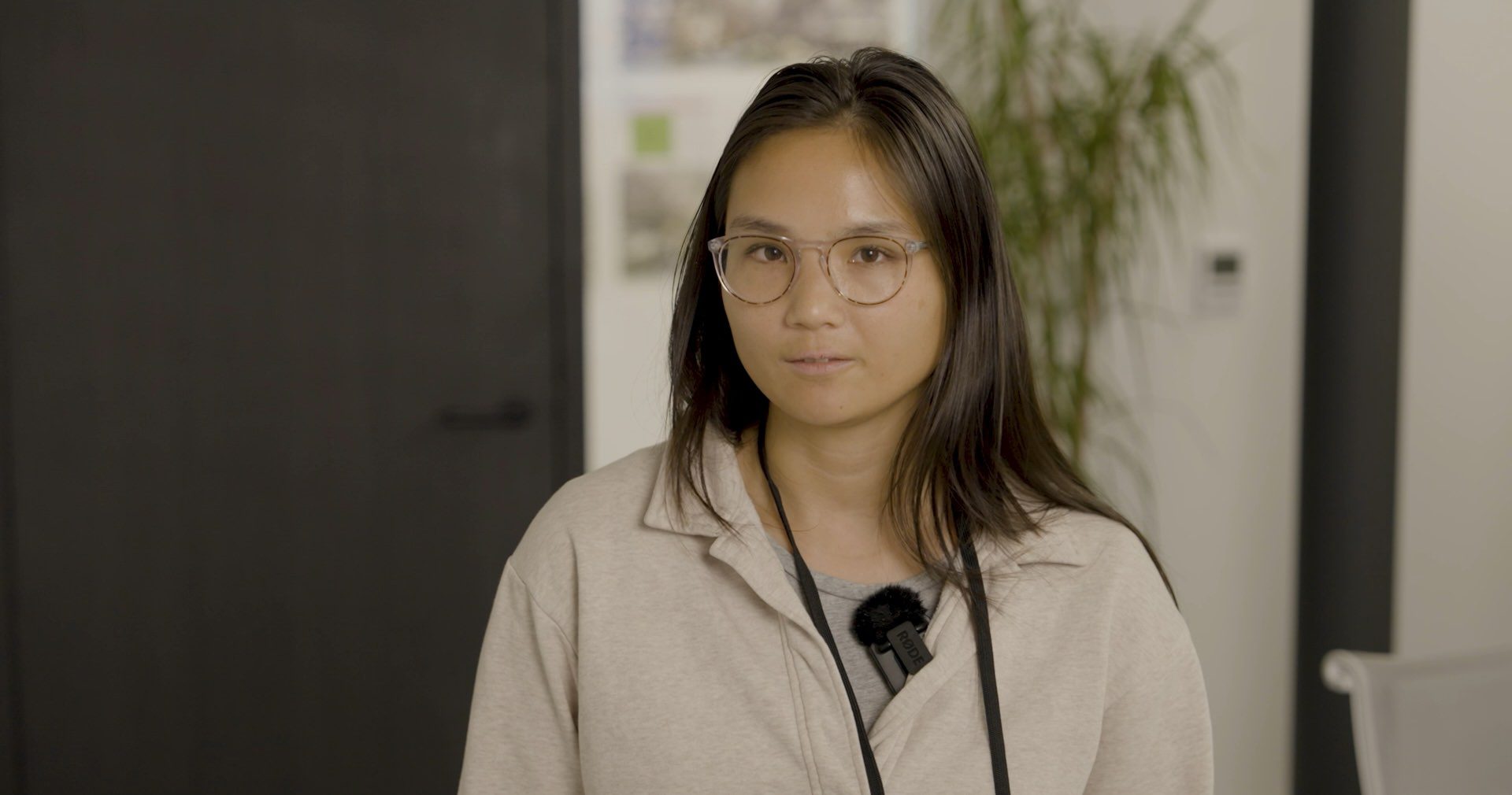
Sophie Moore, Associate Application Developer at Thornton Tomasetti’s CORE Studio, explains the importance of AECtech+ for connecting technologists.
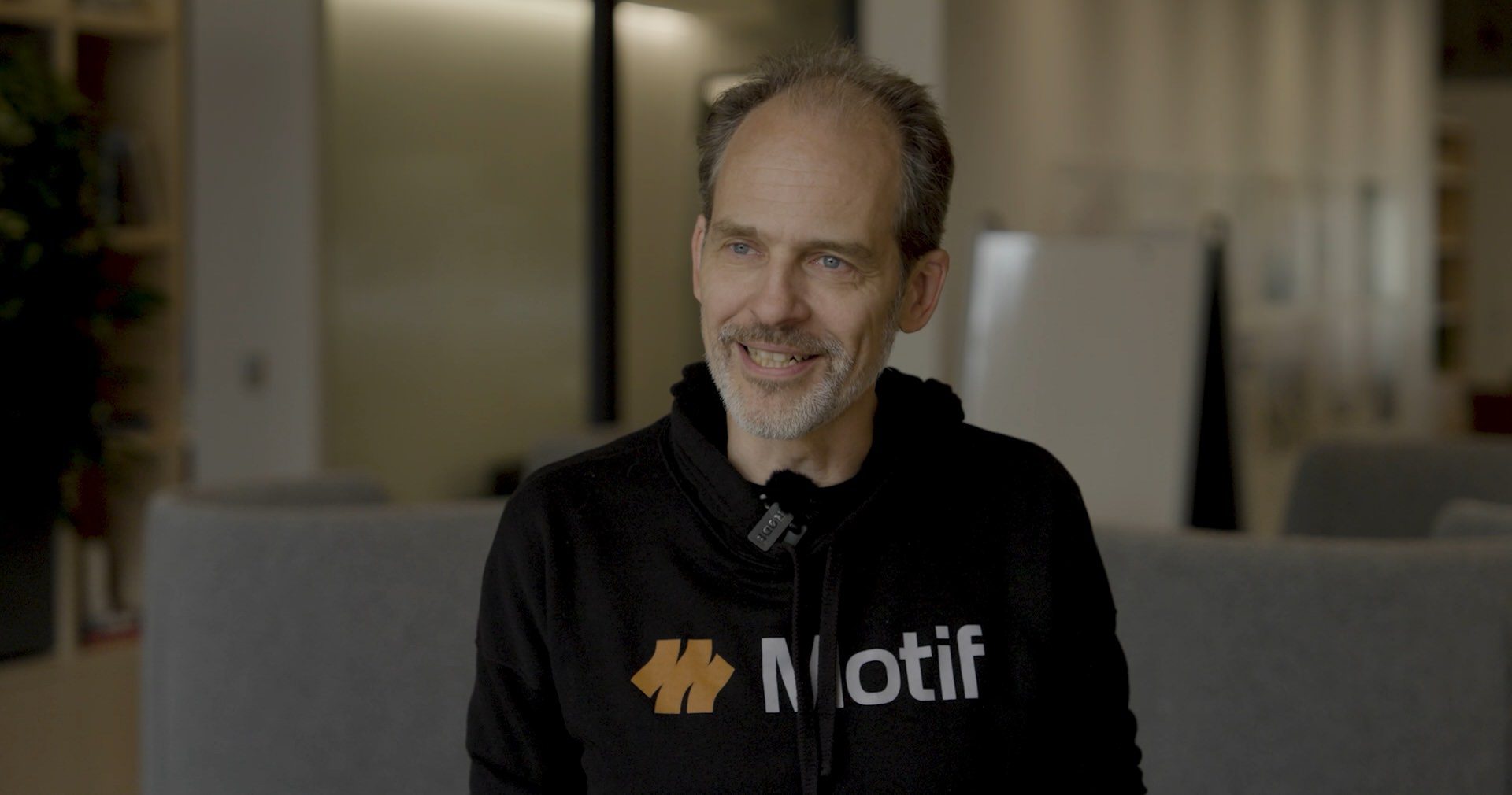
Jeffrey McGrew, a partner at BWC Architects, speaks about the value of AECtech+ and what he finds exciting about the event.