Get Inspiration, Delivered.
Join our newsletter and get inspiring projects, educational resources, and other cool metal stuff, straight to your inbox.
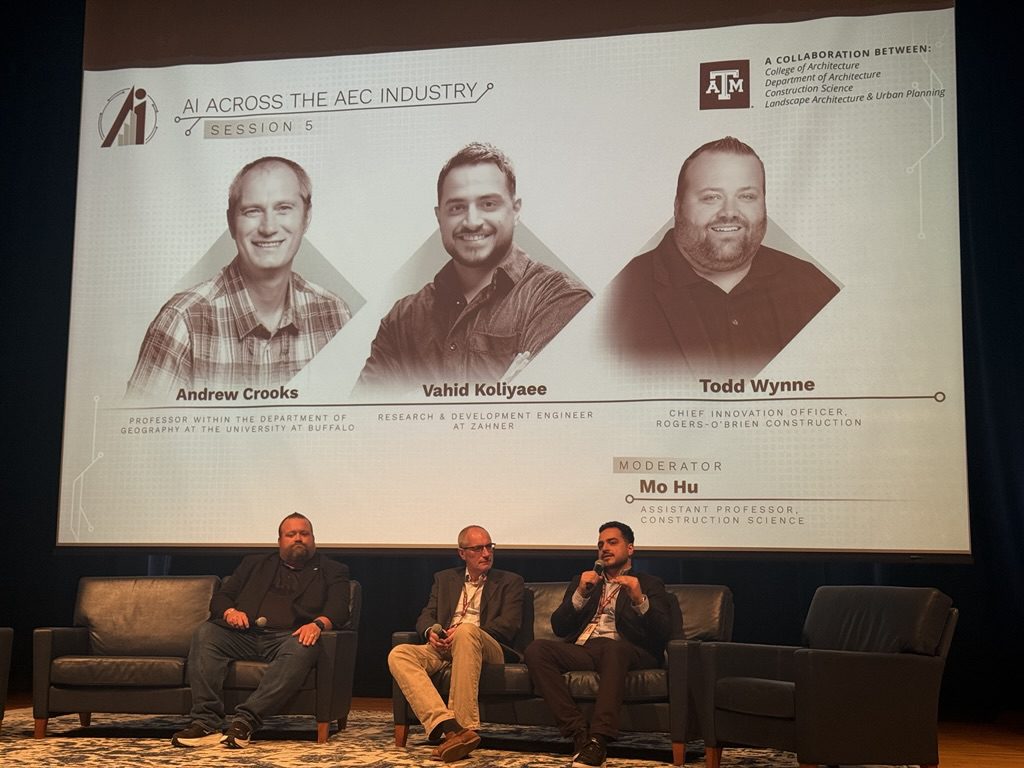
That was the question Vahid Koliyaee, Design Architect at Zahner, explored at Texas A&M University’s inaugural AI Across the AEC Industry Symposium, held October 5–6 in College Station, Texas.
The two-day event brought together academic researchers and professionals from more than 150 architecture, engineering, construction and manufacturing firms to examine how AI is reshaping design, construction and practice.
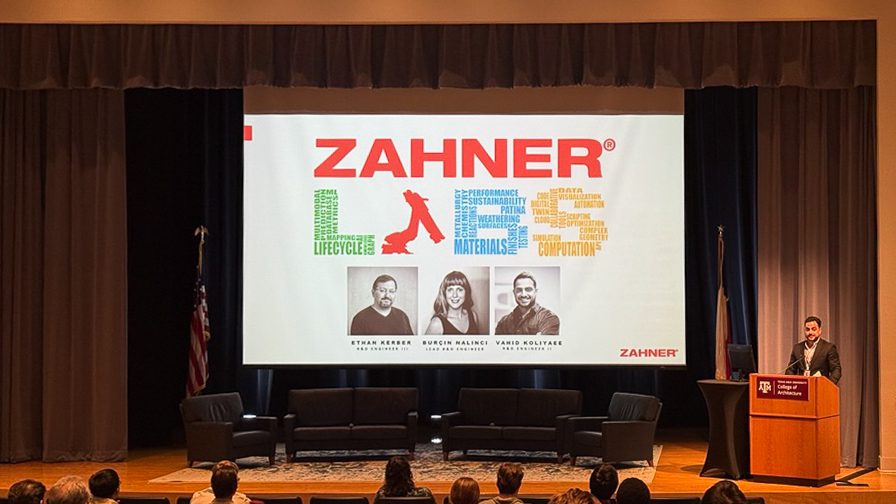
Representing Zahner’s R&D team, Koliyaee presented “The Knowledge Was Always There: AI and Institutional Knowledge Across the Human-Machine Spectrum.” His presentation traced a continuum of innovation at Zahner, from connecting CNC machines directly to architectural models in the 1990s to robotic-assisted welding, digital field-positioning tools and, most recently, AI.
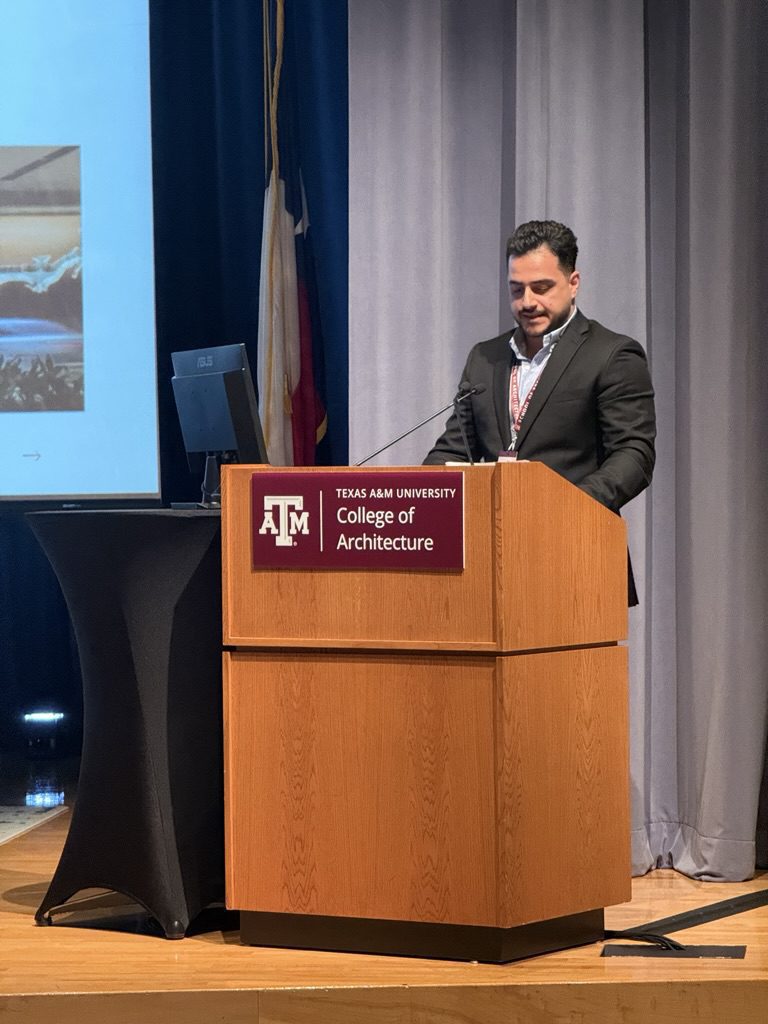
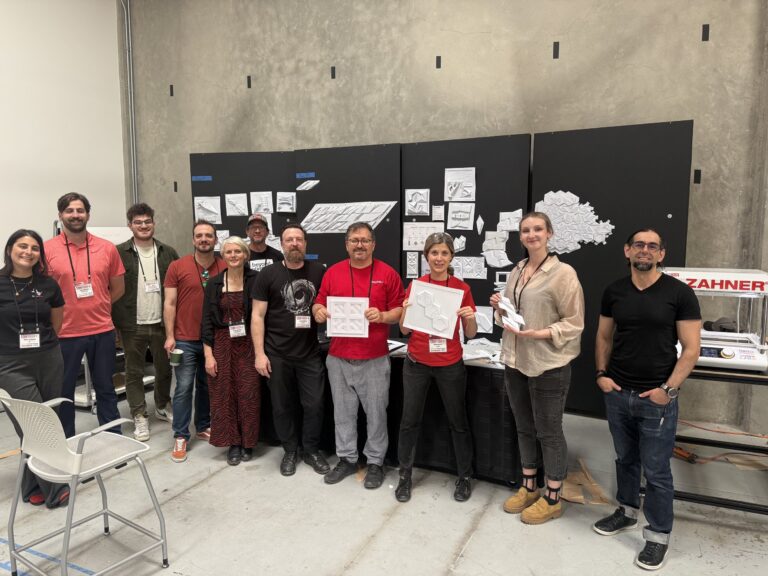
AI Across the AEC Industry Symposium. Photo © A. Zahner Company.
How do you scale the knowledge of a few to the knowledge of many?
At the center of the presentation was a challenge that extends far beyond technology: How do you scale the knowledge of a few to the knowledge of many?
For nearly 130 years, Zahner has accumulated specialized knowledge about materials, fabrication, engineering, installation, and the countless challenges involved in turning ambitious architectural ideas into buildable realities. Much of that knowledge has traditionally lived with the people who developed it, or been scattered among project files, conversations, emails, and code.
Zahner’s internal knowledge AI system captures that problem-solving knowledge as it is created and makes it searchable and reusable. Engineers can find how similar challenges were addressed on previous projects, access related files and code, and understand how solutions evolve.
The system can also help develop code for computational design workflows. At the same time, human expertise remains essential for determining whether a previous solution fits a new material, tolerance, specification, or project.
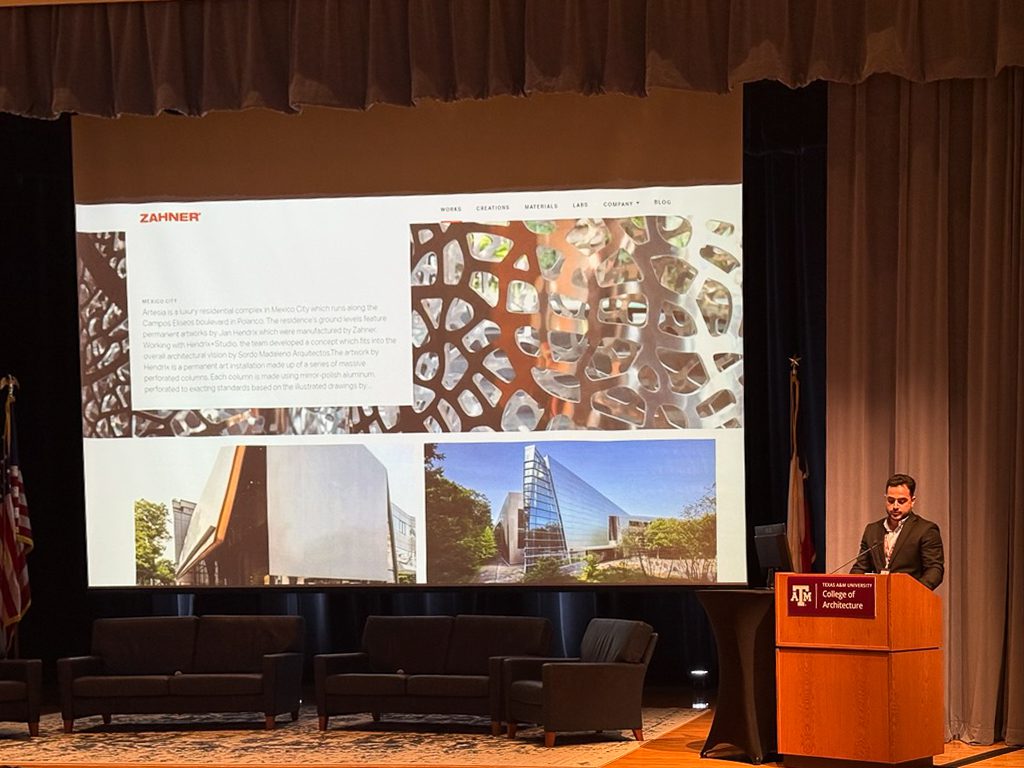
Generational buildings require generational knowledge.
That human element is critical. As Koliyaee explained, Zahner sees AI not as a replacement for skilled people, but as another tool to extend their capabilities and make their experience more accessible across disciplines.
The potential extends beyond engineering. Zahner plans to expand its AI engine across project management, sales, product, and other teams, connecting more of the company’s accumulated knowledge to the people who need it.
Koliyaee summed up his presentation with this simple statement on the challenge at hand, and the AI ambitions of Zahner going forward: “Generational buildings require generational knowledge.”