Blog
Expanding Intelligent, On-Site Fabrication: Can Manufacturing and Logistics Be Simplified With More Transformable Geometries?

Expanding Intelligent, On-Site Fabrication: Can Manufacturing and Logistics Be Simplified With More Transformable Geometries?

SoFi Stadium in Englewood, Calif. is an architecture, engineering, and construction marvel. Designed by HKS Architects and built by Turner Construction and AECOM Hunt, the 70,000-seat stadium also has a 6,000-seat venue and a 2.5-acre plaza, covered by a canopy of translucent ETFE membrane and 34,789 anodized aluminum panels—all unique in perforation and shape—and all fabricated by Zahner.

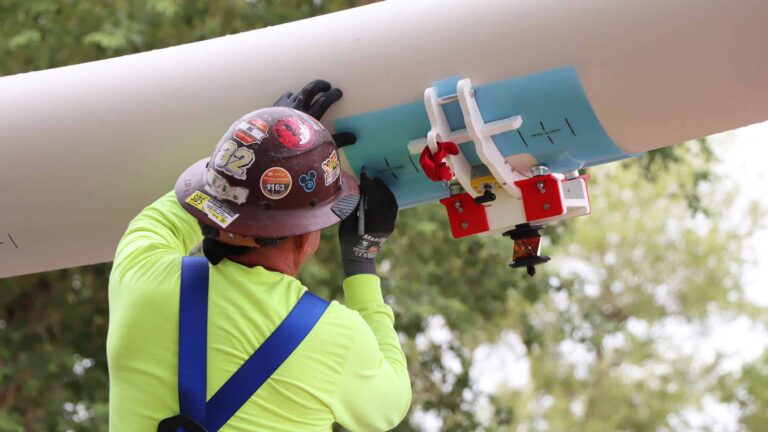
Labs Report 003: Human-Robot Workflows for Positioning in Shop & Field

Labs Report 003: Human-Robot Workflows for Positioning in Shop & Field

Over the past year the Zahner Lab’s team has been focused on a recurring challenge in the AEC industry: translating complex digital geometries into physical structures. The challenge of delivering for these kinds of structures often lead to innovation in our workflows within engineering processes, shop fabrication, and field installation.

Dynamic Design and Feasibility Workflow

Dynamic Design and Feasibility Workflow

Complex projects—those with intricate geometries, specialty materials, and aggressive timelines—leave little room for errors or design missteps. Hitting the mark the first time, or as early as possible in the design process, is the key to overall productivity, profitability and success. Navigating the design space of a project is a non-trivial task (Figure 1) – without fabricator input architects cannot calibrate design decisions for cost and quality.

MaterialComposer

MaterialComposer

Zahner projects are composed of a small number of base metals: Steel, Aluminum, Zinc, and Copper. From there the list grows with a select set of alloys like Stainless Steel (304, 316), Weathering Steel (A606, A588), Anodized Quality Aluminum, Brass, Silicon Bronze, etc. Once you add the varying finishes, coatings, and surface treatments, thousands of options become available for use on architectural projects.

Labs Report 002: Notes from the Field

Labs Report 002: Notes from the Field

Zahner Labs employs a spiral development method for producing products, tools and services. We take ideas through a series of Design > Build > Test > Analyze loops, which allow for stress-testing concepts and integrating feedback. We’ve employed this process in previous product concept “splashes,” including Zinc Concepts, SurveyLink, and Precision Patina.