Independence Temple

Designed by
  • HOK
Location
  • Independence, Missouri

Products, Systems, and ServicesProducts, Systems, and Services

Inverted Seam
Versatile Systems

Inverted Seam

Roof Cladding System

Metal roofs without prominent seams or fasteners.


Zahner Services
Design Assist

Design Assist

Engineering

Engineering

Fabrication

Fabrication

Installation

Installation

Project DataProject Data

Design

Architect

Attributes

Scale
Location
Independence, Missouri

Key Facts

Surface Area
70,000 SF
Address
1001 W Walnut St, Independence, MO, USA

Project Description

Independence Temple /in /by

Independence Temple & Community of Christ International HQ

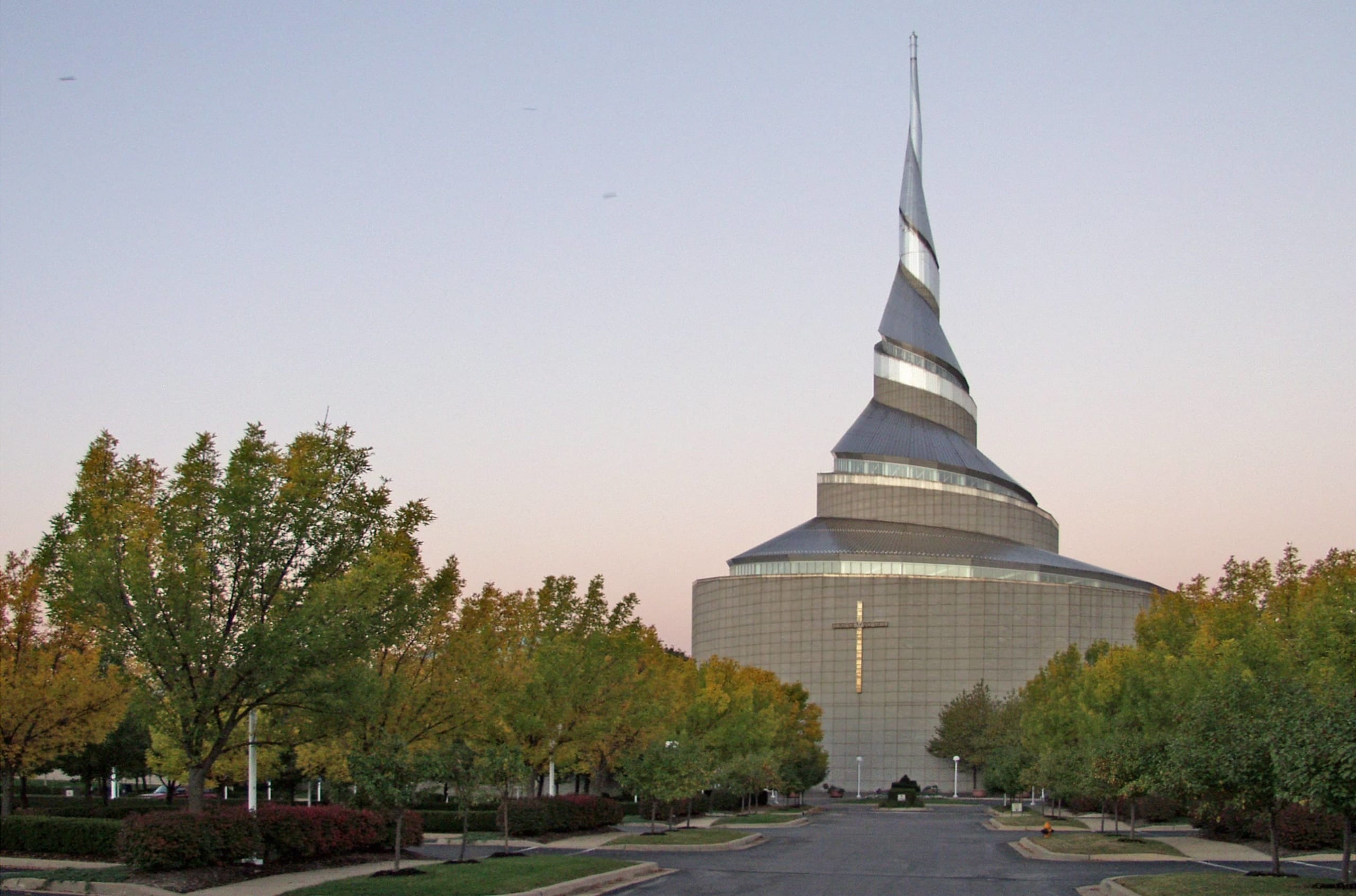
Independence Temple is one of the first architectural icons produced in the Kansas City region with Zahner engineering and fabrication. Located in Independence, Missouri, the building was built in 1994. At the time of construction, it was the RLDS Temple, and later was renamed Independence Temple.

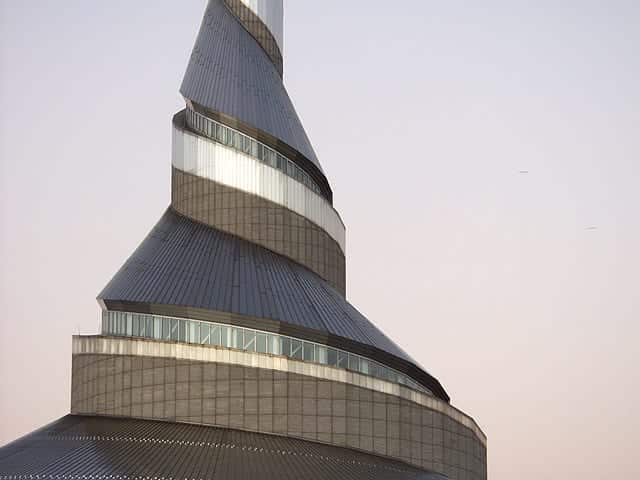
The shape of the design evokes the form of a spiral nautilus shell. Gyo Obata of HOK asked Zahner to develop a conical roof based on a conch shell that he had selected from a large collection of seashells during a design meeting. This form was developed with Zahner engineers into a roof system for the new church headquarters.
Related Project

White Chapel

Zahner was responsible to the Rose-Hulman Institute of Technology for the production and installation of the total building envelope. Zahner designed, fabricated, and installed the custom tapered roof and glazing system.


Independence Temple designed by Gyo Obata of HOK.


Independence Temple designed by Gyo Obata of HOK.

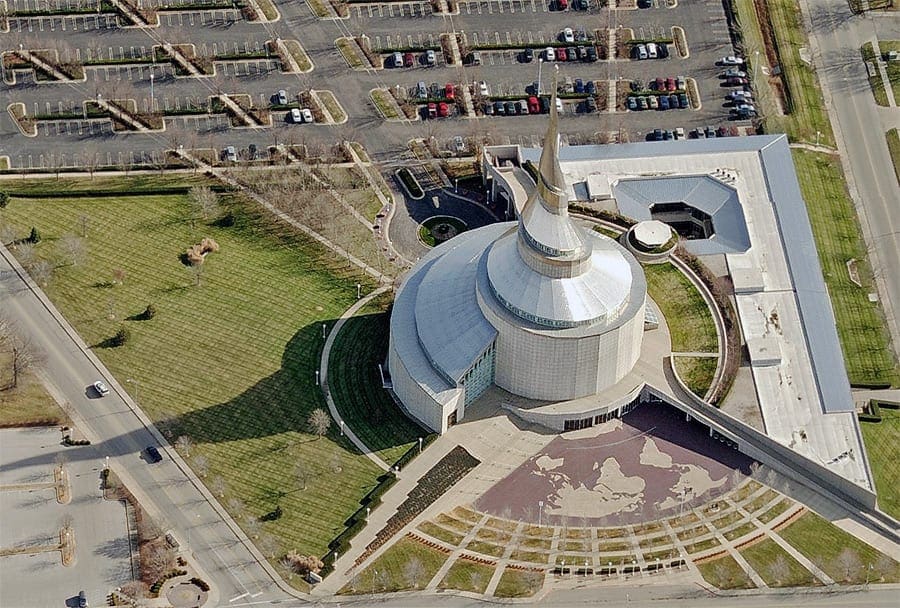
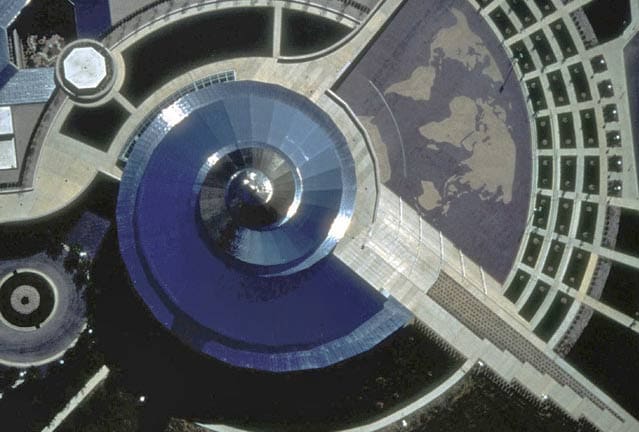
Aerial photograph of the Independence Temple designed by Gyo Obata of HOK.

Aerial photograph of the Independence Temple designed by Gyo Obata of HOK.

Photo © Bing.
Aerial photograph of the Independence Temple in Missouri.

Aerial photograph of the Independence Temple in Missouri.

Detail of the Independence Temple spire, designed by Gyo Obata of HOK.

Detail of the Independence Temple spire, designed by Gyo Obata of HOK.

PHOTO © A. ZAHNER COMPANY.

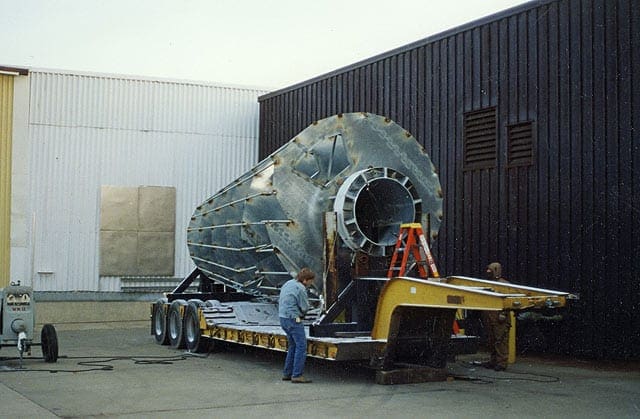
A prefabricated element of the roof spire is secured for shipment.

A prefabricated element of the roof spire is secured for shipment.

PHOTO © A. ZAHNER COMPANY.
The above picture provides a view into the engineering and construction used on the top of the spire. Union workers at Zahner prepare the part for shipment. After its installation, custom engineered panels are attached to the face of the this sub-structure, resulting in a quick and smart installation.

The solution for producing the roof consisting of more than 300 uniquely assembled megapanels, each tapered and unique in shape. This sheet metal skins of the roof cladding are produced in a custom-finish stainless steel. The complexity of this roof attests to the engineering and design prowess, as well as the skilled Zahner fabricators and installation team involved with this project.

How Buildings were Made in the Digital Dark Age

When this building was made in 1994, the architects at HOK used a proprietary software system to complete their design work. At the same time, Zahner engineers were producing their work using AutoCAD to augment what was still mostly drafting at the time.

Today, everything is defined digitally, but in the 1990’s this task was very manual. To develop the project with accuracy, Zahner took field measurements of certain defining points of the roof, and radioed them back to the shop, where a custom written AutoCAD script was waiting to divide the roof surface into panels.

Today, a similar design would be developed from a digital model. However, at the time, using process was sufficient to give Zahner engineers the tools to produce this very intricate design. If Zahner were to produce the project today, the current technologies would cut the project’s schedule in half.

https://azahner.com/wp-content/uploads/2025/11/1_rlds-spire.jpg10801920cmorrishttps://azahner.com/wp-content/uploads/2020/05/logo.svgcmorris2016-08-15 23:31:102025-08-11 16:51:38Independence Temple

Independence Temple & Community of Christ International HQ

Independence Temple is one of the first architectural icons produced in the Kansas City region with Zahner engineering and fabrication. Located in Independence, Missouri, the building was built in 1994. At the time of construction, it was the RLDS Temple, and later was renamed Independence Temple.

The shape of the design evokes the form of a spiral nautilus shell. Gyo Obata of HOK asked Zahner to develop a conical roof based on a conch shell that he had selected from a large collection of seashells during a design meeting. This form was developed with Zahner engineers into a roof system for the new church headquarters.

The above picture provides a view into the engineering and construction used on the top of the spire.  Union workers at Zahner prepare the part for shipment.  After its installation, custom engineered panels are attached to the face of the this sub-structure, resulting in a quick and smart installation.

The solution for producing the roof consisting of more than 300 uniquely assembled megapanels, each tapered and unique in shape. This sheet metal skins of the roof cladding are produced in a custom-finish stainless steel. The complexity of this roof attests to the engineering and design prowess, as well as the skilled Zahner fabricators and installation team involved with this project.

How Buildings were Made in the Digital Dark Age

When this building was made in 1994, the architects at HOK used a proprietary software system to complete their design work.  At the same time, Zahner engineers were producing their work using AutoCAD to augment what was still mostly drafting at the time.

Today, everything is defined digitally, but in the 1990’s this task was very manual. To develop the project with accuracy, Zahner took field measurements of certain defining points of the roof, and radioed them back to the shop, where a custom written AutoCAD script was waiting to divide the roof surface into panels.

Today, a similar design would be developed from a digital model. However, at the time, using process was sufficient to give Zahner engineers the tools to produce this very intricate design. If Zahner were to produce the project today, the current technologies would cut the project’s schedule in half.

Recent Projects

Mayfair at the Grove

Mayfair at the Grove

The Ballpark at America First Square

The Ballpark at America First Square

Cincinnati Open Lindner Family Tennis Center

Cincinnati Open Lindner Family Tennis Center

Google Bay View Campus

Google Bay View Campus

James Turrell Skyspace

James Turrell Skyspace

Schwab Residential Center at Stanford Graduate School of Business

Schwab Residential Center at Stanford Graduate School of Business

Scottsdale Civic Center

Scottsdale Civic Center

UT Arlington Cooper Street Bridge

UT Arlington Cooper Street Bridge

Grand Foyer in the Ambassador Building at Embassy Gardens

Grand Foyer in the Ambassador Building at Embassy Gardens

Mount Sinai Medical Center Parking Garage

Mount Sinai Medical Center Parking Garage